- ホーム
- Cisco
- 300-420J - Designing Cisco Enterprise Networks (300-420日本語版)
- Cisco.300-420J.v2026-08-12.q168
- 質問31
有効的な300-420J問題集はJPNTest.com提供され、300-420J試験に合格することに役に立ちます!JPNTest.comは今最新300-420J試験問題集を提供します。JPNTest.com 300-420J試験問題集はもう更新されました。ここで300-420J問題集のテストエンジンを手に入れます。
300-420J問題集最新版のアクセス
「457問、30% ディスカウント、特別な割引コード:JPNshiken」
展示品を参照してください。
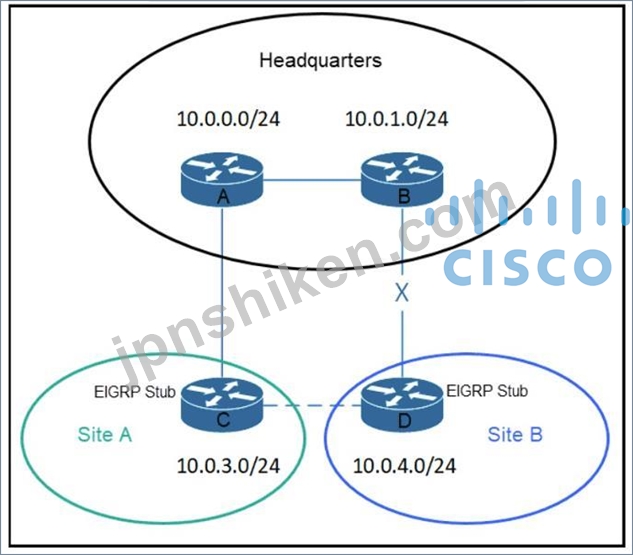
アーキテクトが会社用のルーティング ソリューションを設計しています。新しい設計では、ルータ B と D 間のリンク障害時に 10.0.4.0/24 への接続が失われないようにするために、ルータ C と D に回線を追加します。アーキテクトはどのソリューションを選択する必要がありますか?
アーキテクトが会社用のルーティング ソリューションを設計しています。新しい設計では、ルータ B と D 間のリンク障害時に 10.0.4.0/24 への接続が失われないようにするために、ルータ C と D に回線を追加します。アーキテクトはどのソリューションを選択する必要がありますか?
正解:A
The EIGRP stub connected option is appropriate when the new circuit is intended to protect reachability to a connected subnet without turning the router into a broad transit point. EIGRP stub routing is used to limit the routes a router advertises to its neighbors and to constrain EIGRP query scope. A stub router can advertise connected routes, summary routes, redistributed routes, or combinations depending on the configured stub option. In this scenario, the new C-to-D circuit protects connectivity to 10.0.4.0/24 during a failure between B and D. Advertising the connected network through the stub behavior gives upstream routers a valid alternate route while still preventing unnecessary transit advertisements. Stub redistributed would be used for routes learned from another routing process, not for directly connected networks. Stub receive-only would prevent the router from advertising any routes, which would not protect reachability. Stub leak-map is used for controlled exceptions and is unnecessary if the required route is a connected subnet. Reference topics: EIGRP stub routing, connected route advertisement, query boundary design, DUAL stability.

- 質問一覧「168問」
- 質問1 Cisco SD-WAN アーキテクチャのどの要素が集中ルーティング テー...
- 質問2 Cisco SD-Access アーキテクチャにおけるファブリック管理プレー...
- 質問3 (Exhibit) 展示を参照してください。建築家は、WANトランジット...
- 質問4 ある企業は、遠隔拠点から本社への接続を可能にするプライベート
- 質問5 (Exhibit) 展示を参照してください。アーキテクトは 172.16.0.0/...
- 質問6 SD-Accessアーキテクチャーでファブリック中間ノードが担当する...
- 質問7 Cisco SD-Access アーキテクチャのコンポーネントを左側から右側...
- 質問8 ある企業は、既存のネットワーク インフラストラクチャ内に IPv6...
- 質問9 あるエンジニアが、VoD コンテンツを専門とする会社のためにマル...
- 質問10 SD-WAN展開におけるvSmartコントローラの1つの機能は何ですか?...
- 質問11 (Exhibit) 展示品を参照 従業員ID 4449:30の通信会社に勤務する...
- 質問12 セッション通知に固有のフィルタリングを作成するNETCONF操作は...
- 質問13 左側の説明を、右側の対応する WAN 接続タイプとカテゴリにドラ...
- 質問14 ネットワークエンジニアは、企業のQoSソリューションを再設計し...
- 質問15 ある企業は、管理および運用のオーバーヘッドを軽減するために、
- 質問16 SD-WAN エッジ ルーターではどのキューイング構造が使用されます...
- 質問17 エンジニアがRESTCONF PATCHリクエストを使用してCisco IOS XEデ...
- 質問18 MPLSトランスポートリンクに接続されているWANエッジルーターに...
- 質問19 エンジニアは、顧客向けのQoSソリューションを設計する必要があ...
- 質問20 お客様から、ネットワーク コンポーネントに障害が発生するたび
- 質問21 顧客は、複数のサイトを会社の本社に接続するためのVPNソリュー...
- 質問22 ネットワーク エンジニアは、2 つの別個のドメインを持つネット...
- 質問23 エンジニアはPostmanとYANGを使用してルーターを以下のように設...
- 質問24 SO アクセス アーキテクチャに関する ElD から RLOC へのマッピ...
- 質問25 SDA でノード間のアンダーレイ隣接関係を構築するために、LAN 自...
- 質問26 Cisco SD-Access アーキテクチャにおけるファブリック コントロ...
- 質問27 アーキテクトは、ネットワークのアクセスおよび配信アップリンク
- 質問28 VRRPアドバタイズメントについて正しいものはどれですか。 (2つ...
- 質問29 Cisco SD-Accessファブリックアンダーレイを設計する場合、どの...
- 質問30 左側の WAN 接続の種類を右側の接続ユースケースにドラッグ アン...
- 質問31 展示品を参照してください。 (Exhibit) アーキテクトが会社用の...
- 質問32 (Exhibit) 図を参照してください。Cisco Catalyst SD-WANのセキ...
- 質問33 IS-ISプロトコルを使用してネットワークを設計する場合、どの2つ...
- 質問34 (Exhibit) 図を参照してください。R1 と R2 間のリンクがダウン...
- 質問35 VRRP オブジェクト トラッキングに関する次の 2 つの記述のうち...
- 質問36 (Exhibit) 展示を参照してください。メール サーバー間の接続を...
- 質問37 エンジニアは、XML 表現で YANG を使用して、次の仕様で Cisco I...
- 質問38 展示品を参照してください。 C0FD9 F48C9ACDC725EA850EC2476EE1E...
- 質問39 (Exhibit) 図を参照してください。顧客には、以下をサポートする...
- 質問40 アーキテクトは、リモート オフィスを持つ企業がサポートする IP...
- 質問41 展示品を参照してください。 (Exhibit) アーキテクトは、次の要...
- 質問42 展示品を参照してください。 (Exhibit) ネットワーク エンジニア...
- 質問43 (Exhibit) 展示を参照してください。アーキテクトは、エンタープ...
- 質問44 帯域外ネットワーク管理ソリューションを設計する利点は何ですか
- 質問45 (Exhibit) 展示を参照してください。アーキテクトは、次の要件に...
- 質問46 ブランチ サイトにデュアル WAN エッジ ルーターを導入する場合...
- 質問47 インフラストラクチャ デバイスで同じ機能を設定する場合、IETF....
- 質問48 ある会社の支社では、本社への接続に冗長ルーターとリンクを使用
- 質問49 (Exhibit) 図を参照してください。アーキテクトは、R3 の背後に...
- 質問50 エンジニアは Postman と YANG を使用して、ルーターを次のよう...
- 質問51 エンジニアは、金融アプリケーション用のマルチキャストネットワ
- 質問52 左側の要素を右側で使用されている YANG モデルにドラッグ アン...
- 質問53 1000を超えるルーターで構成されるEIGRPネットワークが設計され...
- 質問54 (Exhibit) 図を参照してください。ネットワーク管理者は、すべて...
- 質問55 展示品を参照してください。 (Exhibit) アーキテクトは、Wake-on...
- 質問56 一般的な Cisco SD-WAN 展開でフルメッシュ iPsec トンネルを確...
- 質問57 (Exhibit) 展示を参照してください。完全な EIGRP ルーティング ...
- 質問58 (Exhibit) 図を参照してください。エンジニアは、完全なインター...
- 質問59 同じ2つのBGP機能のうち、同じAS番号を共有するeBGPネイバー間の...
- 質問60 組織は、2つの異なる自律システムにマルチキャストを展開するこ
- 質問61 図を参照してください。メディアコンテンツを制作する中規模企業
- 質問62 (Exhibit) 展示を参照してください。エンジニアは、ループのない...
- 質問63 (Exhibit) 展示を参照してください。アーキテクトは、次のような...
- 質問64 オーバーレイ管理プロトコルがSD-WANオーバーレイでアドバタイズ...
- 質問65 (Exhibit) 展示を参照してください。エンジニアは、ルーティング...
- 質問66 クライアントはモデル駆動型テレメトリに移行しており、定期的な
- 質問67 cisco TelePresence システムをインストールして以来、この会社...
- 質問68 (Exhibit) 図を参照してください。予算の制約により、顧客はデバ...
- 質問69 (Exhibit) 図を参照してください。顧客は、OSPF を実行している ...
- 質問70 帯域外管理ネットワークを設計する際に従う必要がある2つのベス
- 質問71 エンジニアは、サービスプロバイダーとのデュアルBGPピアリング...
- 質問72 アーキテクトは、スパニングツリープロトコルを利用してループの
- 質問73 (Exhibit) 図を参照してください。ネットワーク設計者がEIGRPに...
- 質問74 (Exhibit) 図を参照してください。ある建築家がレイヤー3キャン...
- 質問75 アーキテクトは、100台を超えるルーターを含むネットワーク用の...
- 質問76 カスタマーソリューションでは、WANを介したストリーミングマル...
- 質問77 (Exhibit)
- 質問78 ネットワーク設計者はLANでテレビサービスを有効にしています。...
- 質問79 (Exhibit) 展示を参照してください。エンジニアは、QoS 設計によ...
- 質問80 ポリシーが定義されていない場合、Cisco Catalyst SD-WANアーキ...
- 質問81 ある企業は、複数の部門の移転を支援するため、本社を拡張してい
- 質問82 展示品を参照してください。 (Exhibit) アーキテクトは、エンタ...
- 質問83 どのタイプのランデブー ポイント展開が標準ベースであり、動的 ...
- 質問84 Cisco SO-Access アーキテクチャ内で VN 内トラフィックのフィル...
- 質問85 (Exhibit) 展示を参照してください。アーキテクトは、顧客向けに...
- 質問86 OSPFネットワークでの収束を改善するために実行できる2つのステ...
- 質問87 (Exhibit) 図を参照してください。顧客は、単一のCEルータから2...
- 質問88 インフラストラクチャチームは、デバイスの共有メモリ使用率を懸
- 質問89 複数のネットワークロケーションに同じサブネットが存在できるよ
- 質問90 同じ自律システム内のEIGRPネイバー間のルートをフィルタリング...
- 質問91 (Exhibit) 展示を参照してください。アーキテクトは、IPv4 から ...
- 質問92 ネットワーク エンジニアは、IP アドレス 172.16.15.12/32 のル...
- 質問93 複数の支店を持つグローバル組織は、オーバーレイVPNソリューシ...
- 質問94 (Exhibit) 図を参照してください。エンジニアがクライアント用の...
- 質問95 左側の特性を、右側で説明されている YANG モジュールにドラッグ...
- 質問96 エンジニアは、2 つのホストが通信できるようにするネットワーク...
- 質問97 SD-WANオーバーレイにおいて、オーバーレイ管理プロトコルはどの...
- 質問98 ネットワークソリューションは、複数のインターネットサービスプ
- 質問99 (Exhibit) 図を参照してください。顧客は、リモート ブランチと...
- 質問100 左側の特性を、右側で説明されている構成プロトコルにドラッグ
- 質問101 Cisco SD-Accessオーバーレイ設計の主な目的は何ですか?...
- 質問102 Cisco SD-Accessアーキテクチャにおけるコントロールプレーンノ...
- 質問103 (Exhibit) 図を参照してください。アーキテクトが顧客向けにレイ...
- 質問104 (Exhibit) 図を参照してください。顧客は、データセンターに 3 ...
- 質問105 アーキテクトは、企業ネットワーク機器を管理するための計画を設
- 質問106 (Exhibit) 展示を参照してください。Cisco Catalyst スイッチは...
- 質問107 ある企業は、既存のサーバー上でネットワーク内におけるIPv6アプ...
- 質問108 (Exhibit) 展示を参照してください。アーキテクトは、172 20 0.0...
- 質問109 企業は、最近、唯一の MPLS プロバイダーで障害が発生したため、...
- 質問110 IPsec VPNが設計されている場合、IPマルチキャストのサポートが...
- 質問111 ある会社は、2つの新しい支店を開設し、その地域に2a01:c30:16...
- 質問112 フラグメンテーションの問題を回避するために、Cisco SD-WANはど...
- 質問113 ある顧客は、以下の高レベル設計要件に基づいて、企業内でWoL(Wa...
- 質問114 ワイヤレスエンドポイントは、Cisco SD-AccessアーキテクチャのH...
- 質問115 Cisco SD-Accessネットワークファブリックのコントロールプレー...
- 質問116 ネットワーク エンジニアは、キャンパス OSPF 展開を最適化する...
- 質問117 エンジニアはNETCONFおよびCisco NX-OSベースのデバイスを使用し...
- 質問118 ある企業がサービスプロバイダと協力してBGPポリシーを設計して...
- 質問119 エンジニアは、マルチベンダーネットワーク環境を管理するための
- 質問120 vEdgeルーターの冗長性が設計されている場合、どのFHRPがサポー...
- 質問121 (Exhibit) 図を参照してください。エリア 10 は通常の OSPF エリ...
- 質問122 (Exhibit) 展示資料を参照してください。以下の要件を満たす必要...
- 質問123 エンジニアは、定義済みのビジネス要件に基づいてトラフィックを
- 質問124 エンジニアは、複数のレイヤー3仮想ネットワークを作成する機能
- 質問125 すべてのサイトにインターネットへの直接アクセスが実装されたSD...
- 質問126 gRPC はどのような統合機能を提供しますか?
- 質問127 SO-WAN アーキテクチャで HOC 接続を最小限に抑え、vSmart コン...
- 質問128 アーキテクトは、次の要件に基づいて 4 つのサブネット間で 40 M...
- 質問129 エンジニアは、ブランチ サイトを持つ顧客向けにインバンド管理
- 質問130 DMVPNトンネルフラップが断続的に発生する一般的な問題はどれで...
- 質問131 Cisco SD-WAN ネットワーク ファブリックでの TLOC 拡張の目的は...
- 質問132 ISPは、MPLSを介したレイヤ3 VPNサービスを、4つのブランチと各...
- 質問133 Cisco Catalyst SD-WAN Cloud OnRampの目的は何ですか?...
- 質問134 (Exhibit) 展示品を参照してください。エンジニアは、次のような...
- 質問135 (Exhibit) 図を参照してください。顧客は、GigabitEthernet0/2 ...
- 質問136 モデル駆動型テレメトリの考慮事項を左側から右側の適用先のモー
- 質問137 左側の Cisco SD-WAN コンポーネントを右側の定義にドラッグ ア...
- 質問138 お客様は、ネットワークコンサルタントとQoS要件について話し合...
- 質問139 エンジニアは、レイヤ3ルータが1つしかない小さなブランチサイト...
- 質問140 (Exhibit) 展示を参照してください。顧客から、2 つの場所間でポ...
- 質問141 展示品を参照してください。 (Exhibit) 顧客はコア ルータで HSR...
- 質問142 (Exhibit) 図を参照してください。ある企業が顧客向けにアプリケ...
- 質問143 アーキテクトは、以下を含むキャンパスネットワークソリューショ
- 質問144 (Exhibit) 図を参照してください。現在、すべてのルータは OSPF ...
- 質問145 (Exhibit) 展示を参照してください。エンジニアは、次の要件を満...
- 質問146 ネットワークでモデル駆動型テレメトリを使用する利点は何ですか
- 質問147 モデル駆動型のテレメトリ ダイヤルアウト アプローチはどのよう...
- 質問148 (Exhibit) 図を参照してください。エンジニアは、IPv6 アイラン...
- 質問149 ネットワークエンジニアが、Ciscoレイヤ2スイッチの代替ポートま...
- 質問150 あるアーキテクトが、大規模なデータ センターのインフラストラ
- 質問151 ブランチ オフィスには、メイン オフィスに戻るプライマリ L3VPN...
- 質問152 エンジニアは、XML 表現で YANG を使用して、次の仕様で Cisco I...
- 質問153 (Exhibit) 展示を参照してください。従業員 ID: 4384:99:754 の...
- 質問154 ネットワークエンジニアは、マルチキャストトラフィックをサポー
- 質問155 (Exhibit) 図を参照してください。アーキテクトはトポロジのルー...
- 質問156 ネットワークエンジニアは、IS-ISルーティングを使用して相互接...
- 質問157 エンジニアは、BGP を使用してインターネット接続のために ISP ...
- 質問158 PIM スパース モードで、マルチキャスト対応デバイスで RPF チェ...
- 質問159 建築家は、地域医療センター向けに、地域に分散したデータセンタ
- 質問160 (Exhibit) 展示を参照してください。アーキテクトは、会社のエン...
- 質問161 企業は、建物の 1 つのフロアでアクセス ポートの容量を増やす必...
- 質問162 (Exhibit) 展示を参照してください。従業員 ID: 1234 56:789 の...
- 質問163 ファブリック データ プレーンは SD-Access アーキテクチャで何...
- 質問164 左側の説明を右側の該当するカテゴリにドラッグ アンド ドロップ...
- 質問165 左側の特性を、右側の適用先のテレメトリ モードにドラッグ アン...
- 質問166 建築家は、会社のメインサイトをいくつかの中小規模のリモートブ
- 質問167 展示品を参照してください。 (Exhibit) すべてのリンクに EIGRP ...
- 質問168 マルチキャスト ネットワークでは、RP アドレスに対して RPF チ...
