ケーススタディ1 - Litware
既存の環境
Azure環境
Litware には、Litware.com テナントにリンクされた Azure サブスクリプションが 10 件、dev.litware.com テナントにリンクされた Azure サブスクリプションが 5 件あります。これらのサブスクリプションはすべて Enterprise Agreement (EA) に加入しています。
litware.com テナントには、Azure Storage 内の BLOB とファイルに対する DataActions 読み取りアクセス許可を付与する Role1 という名前のカスタム Azure ロールベースのアクセス制御 (Azure RBAC) ロールが含まれています。
オンプレミス環境
Litware のオンプレミス ネットワークには、次の表に示すリソースが含まれています。
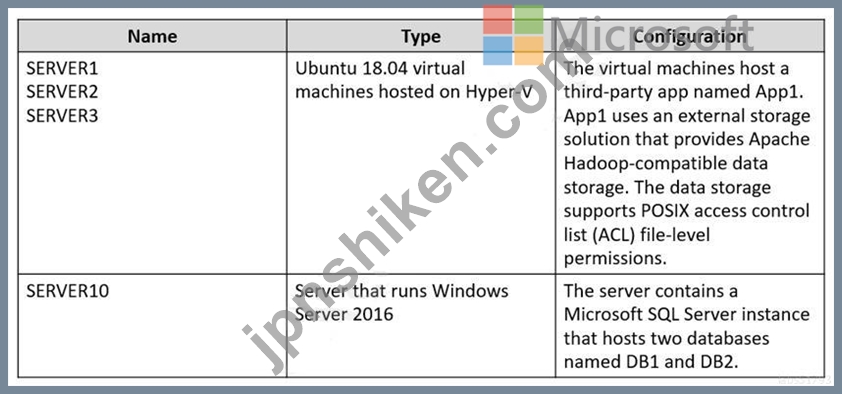
ネットワーク環境
Litware は Azure への ExpressRoute 接続を備えています。
計画された変更と要件
Litware は次の変更を実施する予定です。
* DB1 と DB2 を Azure に移行します。
* App1 を Azure 仮想マシンに移行します。
* App1 で使用される外部ストレージを Azure Storage に移行します。
* App1 をホストする Azure 仮想マシンを Azure 専用ホストにデプロイします。
認証と承認の要件
Litware では、次の認証および承認の要件が識別されます。
* Azure ポータルを使用して運用環境を管理するユーザーのみが、ハイブリッド Azure AD 参加デバイスから接続し、Azure Multi-Factor Authentication (MFA) を使用して認証する必要があります。
* すべての Azure サブスクリプション内のすべての仮想ネットワークに対する権限をネットワーク管理者に付与するには、ネットワーク共同作成者の組み込み RBAC ロールを使用する必要があります。
* Azure 内のリソースにアクセスするには、App1 はアプリをホストする仮想マシンのマネージド ID を使用する必要があります。
* RBAC ロールは可能な限り最高レベルで適用する必要があります。
回復力要件
Litware では、次の回復力要件を特定しています。
* Azure に移行したら、DB1 と DB2 は次の要件を満たす必要があります。
- ローカル Azure リージョン内の 2 つの可用性ゾーンに障害が発生した場合でも、可用性を維持します。
- 自動的にフェイルオーバーします。
- I/O レイテンシを最小限に抑えます。
* App1 は次の要件を満たしている必要があります。
- 可用性ゾーンをサポートする Azure リージョンでホストされる。
- 自動スケーリングをサポートする Azure 仮想マシンでホストされます。
- ローカル Azure リージョン内の 2 つの可用性ゾーンに障害が発生した場合でも、可用性を維持します。
セキュリティとコンプライアンスの要件
Litware では、次のセキュリティとコンプライアンスの要件を特定しています。
* App1 を Azure に移行したら、新しいデータをアプリに書き込むことができ、新規データと既存データの変更が 3 年間防止されるようにする必要があります。
* オンプレミスのユーザーとサービスは、App1 でデータをホストする Azure ストレージ アカウントにアクセスできる必要があります。
* App1 データをホストする Azure ストレージ アカウントのパブリック エンドポイントへのアクセスを防止する必要があります。
* 運用環境内のすべての Azure SQL データベースで、透過的なデータ暗号化 (TDE) が有効になっている必要があります。
* App1 は他のワークロードと物理ハードウェアを共有してはなりません。
ビジネス要件
Litware では、次のビジネス要件が特定されています。
* 管理上の労力を最小限に抑えます。
* コストを最小限に抑えます。
ドラッグアンドドロップの質問
Azure SQL データベースで Transparent Data Encryption (TDE) が有効になっていることを確認するには、Azure ポリシーを構成する必要があります。ソリューションは、セキュリティとコンプライアンスの要件を満たす必要があります。
順番に実行する必要がある 3 つのアクションはどれですか。回答するには、適切なアクションをアクション リストから回答領域に移動し、正しい順序に並べます。

既存の環境
Azure環境
Litware には、Litware.com テナントにリンクされた Azure サブスクリプションが 10 件、dev.litware.com テナントにリンクされた Azure サブスクリプションが 5 件あります。これらのサブスクリプションはすべて Enterprise Agreement (EA) に加入しています。
litware.com テナントには、Azure Storage 内の BLOB とファイルに対する DataActions 読み取りアクセス許可を付与する Role1 という名前のカスタム Azure ロールベースのアクセス制御 (Azure RBAC) ロールが含まれています。
オンプレミス環境
Litware のオンプレミス ネットワークには、次の表に示すリソースが含まれています。
ネットワーク環境
Litware は Azure への ExpressRoute 接続を備えています。
計画された変更と要件
Litware は次の変更を実施する予定です。
* DB1 と DB2 を Azure に移行します。
* App1 を Azure 仮想マシンに移行します。
* App1 で使用される外部ストレージを Azure Storage に移行します。
* App1 をホストする Azure 仮想マシンを Azure 専用ホストにデプロイします。
認証と承認の要件
Litware では、次の認証および承認の要件が識別されます。
* Azure ポータルを使用して運用環境を管理するユーザーのみが、ハイブリッド Azure AD 参加デバイスから接続し、Azure Multi-Factor Authentication (MFA) を使用して認証する必要があります。
* すべての Azure サブスクリプション内のすべての仮想ネットワークに対する権限をネットワーク管理者に付与するには、ネットワーク共同作成者の組み込み RBAC ロールを使用する必要があります。
* Azure 内のリソースにアクセスするには、App1 はアプリをホストする仮想マシンのマネージド ID を使用する必要があります。
* RBAC ロールは可能な限り最高レベルで適用する必要があります。
回復力要件
Litware では、次の回復力要件を特定しています。
* Azure に移行したら、DB1 と DB2 は次の要件を満たす必要があります。
- ローカル Azure リージョン内の 2 つの可用性ゾーンに障害が発生した場合でも、可用性を維持します。
- 自動的にフェイルオーバーします。
- I/O レイテンシを最小限に抑えます。
* App1 は次の要件を満たしている必要があります。
- 可用性ゾーンをサポートする Azure リージョンでホストされる。
- 自動スケーリングをサポートする Azure 仮想マシンでホストされます。
- ローカル Azure リージョン内の 2 つの可用性ゾーンに障害が発生した場合でも、可用性を維持します。
セキュリティとコンプライアンスの要件
Litware では、次のセキュリティとコンプライアンスの要件を特定しています。
* App1 を Azure に移行したら、新しいデータをアプリに書き込むことができ、新規データと既存データの変更が 3 年間防止されるようにする必要があります。
* オンプレミスのユーザーとサービスは、App1 でデータをホストする Azure ストレージ アカウントにアクセスできる必要があります。
* App1 データをホストする Azure ストレージ アカウントのパブリック エンドポイントへのアクセスを防止する必要があります。
* 運用環境内のすべての Azure SQL データベースで、透過的なデータ暗号化 (TDE) が有効になっている必要があります。
* App1 は他のワークロードと物理ハードウェアを共有してはなりません。
ビジネス要件
Litware では、次のビジネス要件が特定されています。
* 管理上の労力を最小限に抑えます。
* コストを最小限に抑えます。
ドラッグアンドドロップの質問
Azure SQL データベースで Transparent Data Encryption (TDE) が有効になっていることを確認するには、Azure ポリシーを構成する必要があります。ソリューションは、セキュリティとコンプライアンスの要件を満たす必要があります。
順番に実行する必要がある 3 つのアクションはどれですか。回答するには、適切なアクションをアクション リストから回答領域に移動し、正しい順序に並べます。


