- ホーム
- Microsoft
- AZ-204J - Developing Solutions for Microsoft Azure (AZ-204日本語版)
- Microsoft.AZ-204J.v2026-08-22.q322
- 質問161
有効的なAZ-204J問題集はJPNTest.com提供され、AZ-204J試験に合格することに役に立ちます!JPNTest.comは今最新AZ-204J試験問題集を提供します。JPNTest.com AZ-204J試験問題集はもう更新されました。ここでAZ-204J問題集のテストエンジンを手に入れます。
AZ-204J問題集最新版のアクセス
「655問、30% ディスカウント、特別な割引コード:JPNshiken」
ドラッグアンドドロップ問題
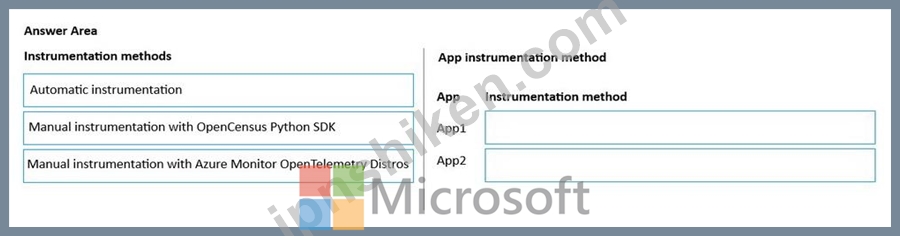
Sub1という名前のAzureサブスクリプションをお持ちです。
Sub1に、App1とApp2という名前の2つのPythonベースのアプリをデプロイする予定です。App1はLinux上のAzure App Serviceにコードとして公開されます。App2はAzure Functionsアプリとして実装されます。
あなたは、App1とApp2からリクエストテレメトリを収集するために、Azure Application Insightsの固定レートサンプリングを使用する予定です。開発と実装の手間を最小限に抑える必要があります。
各アプリごとに計測方法を選択する必要があります。
どの計測方法を選択すべきでしょうか?回答欄で適切な選択肢を選んでください。
注:正解ごとに1ポイントが加算されます。
Sub1という名前のAzureサブスクリプションをお持ちです。
Sub1に、App1とApp2という名前の2つのPythonベースのアプリをデプロイする予定です。App1はLinux上のAzure App Serviceにコードとして公開されます。App2はAzure Functionsアプリとして実装されます。
あなたは、App1とApp2からリクエストテレメトリを収集するために、Azure Application Insightsの固定レートサンプリングを使用する予定です。開発と実装の手間を最小限に抑える必要があります。
各アプリごとに計測方法を選択する必要があります。
どの計測方法を選択すべきでしょうか?回答欄で適切な選択肢を選んでください。
注:正解ごとに1ポイントが加算されます。
正解:
Explanation:
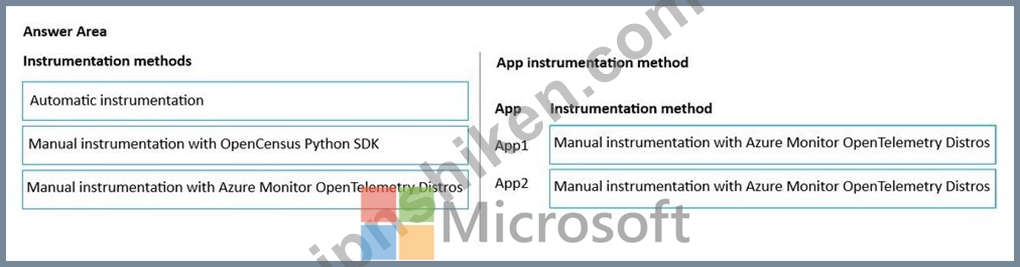
Box 1: Manual instrumentation with Azure Monitor OpenTelemetry Distros
The best instrumentation methodology for this application is code-based instrumentation using the Azure Monitor OpenTelemetry Distro.
Why Code-Based Instrumentation?
While Azure App Service supports auto-instrumentation (codeless monitoring) for certain runtimes, configuring fixed-rate sampling for Python requires explicit application-level controls.
Autoinstrumentation Limitation: Portal-based, zero-code monitoring uses adaptive sampling by default on server-side apps.
Fixed-Rate Requirement: To enforce a strict, predictable fixed-rate sampling percentage directly at the application source, you must configure it using code-based SDK settings.
Box 2: Manual instrumentation with Azure Monitor OpenTelemetry Distros
The best methodology for this app is Manual instrumentation with Azure Monitor OpenTelemetry Distros.
Rationale
Why Manual OpenTelemetry Distro wins:
The Azure Monitor OpenTelemetry Distro for Python is Microsoft's modern, recommended standard. It requires only one line of code (configure_azure_monitor()) to initialize, perfectly aligning with your constraint to keep development and implementation effort to a absolute minimum. It fully supports custom fixed-rate sampling natively via configuration parameters or environment variables.
Incorrect:
Why Automatic instrumentation is ruled out:
For Python applications connecting to Azure Monitor, true automatic (agent-based) instrumentation is not supported. You must include a minimal code-based initialization to stream telemetry.
Why OpenCensus is ruled out:
OpenCensus is the legacy SDK path. While it supports fixed-rate sampling, Microsoft has deprecated classic SDKs/OpenCensus in favor of OpenTelemetry. Choosing it would introduce technical debt right from the start Reference:
https://learn.microsoft.com/en-us/azure/azure-monitor/app/app-insights-overview

- 質問一覧「322問」
- 質問1 ドラッグアンドドロップ問題 あなたはREST Webサービスを開発し...
- 質問2 Azure Tableストレージを使用して、アプリケーションの顧客情報...
- 質問3 ケーススタディ10 - 4回目のコーヒー 背景 フォースコーヒーは、...
- 質問4 ホットスポットに関する質問 あなたは、可用性ゾーン内の Azure ...
- 質問5 ドラッグアンドドロップ問題 あなたは、Azure Blob GPv1 Premium...
- 質問6 ホットスポットに関する質問 食品配達の料金支払いに使用されるW...
- 質問7 ホットスポットに関する質問 オンプレミス環境内に、社内専用の ...
- 質問8 注:この問題は、同じシナリオを提示する一連の問題の一部です。
- 質問9 ホットスポットに関する質問 あなたは、Service Busキューに含ま...
- 質問10 事例研究7 - Proseware, Inc. 背景 あなたはProseware社の開発者...
- 質問11 ある企業が、既存のオンプレミス環境にあるサードパーティ製ウェ
- 質問12 事例研究3 - シティ・パワー&ライト 背景 City Power & Lig...
- 質問13 注:この問題は、同じシナリオを提示する一連の問題の一部です。
- 質問14 ある組織がAzure Cosmos DBを導入する。 アイテムが作成、更新、...
- 質問15 事例研究3 - シティ・パワー&ライト 背景 City Power & Lig...
- 質問16 あなたは、Microsoft Entraテナントと連携するアプリケーション...
- 質問17 ケーススタディ10 - 4回目のコーヒー 背景 フォースコーヒーは、...
- 質問18 注:この問題は、全く同じ設定を描いた複数の問題の中に含まれて
- 質問19 事例研究8 - VanArsdel, Ltd 背景 VanArsdel, Ltd.は、グローバ...
- 質問20 Azure Database for MySQLインスタンスに接続するASP.NET Coreア...
- 質問21 注:この問題は、同じシナリオを提示する一連の問題の一部です。
- 質問22 注:この質問は、同じシナリオを提示する一連の質問の一部です。
- 質問23 ドラッグアンドドロップ問題 言語理解インテリジェンスサービス(...
- 質問24 Application Insights SDKをソリューションに統合することで、AS...
- 質問25 事例研究7 - Proseware, Inc. 背景 あなたはProseware社の開発者...
- 質問26 ホットスポットに関する質問 image1 という名前のコンテナイメー...
- 質問27 注:この質問は、同じシナリオを提示する一連の質問の一部です。
- 質問28 注:この質問は、同じシナリオを提示する一連の質問の一部です。
- 質問29 ホットスポットに関する質問 あなたは、Azure Storage を使用し...
- 質問30 ドラッグアンドドロップ問題 あなたは、医療従事者が自身の情報
- 質問31 Azure Batchジョブを作成して実行するためのコードを記述してい...
- 質問32 事例研究1 - Litware Inc. 背景 あなたは、従業員の経費管理ソリ...
- 質問33 ホットスポットに関する質問 あなたは、世界中の地震データへの
- 質問34 ホットスポットに関する質問 Azure Cache for Redis インスタン...
- 質問35 注:この質問は、同じシナリオを提示する一連の質問の一部です。
- 質問36 ホットスポットに関する質問 あなたは、Azure Blobストレージに...
- 質問37 お客様は、Azure API Management マネージド Web サービスをクラ...
- 質問38 ホットスポットに関する質問 コンテナを使用して、Python Webサ...
- 質問39 あなたは、いくつかの Azure API Management (APIM) でホストさ...
- 質問40 ドラッグアンドドロップ問題 あなたはAzure Container Appsを使...
- 質問41 Application Insights SDKをソリューションに統合することで、AS...
- 質問42 注:この質問は、同じシナリオを提示する一連の質問の一部です。
- 質問43 Java RESTful APIを開発してAzure App Serviceにデプロイします...
- 質問44 注:この質問は、同じシナリオを提示する一連の質問の一部です。
- 質問45 Insights1 というワークスペースベースの Azure Application Ins...
- 質問46 Azure仮想マシンでホストされる多層アプリケーションを設計して...
- 質問47 GPU リソースを使用してレンダリング プロセスを最適化するイメ...
- 質問48 事例研究6 - コントソ社 背景 概要 あなたはContoso, Ltd.の開発...
- 質問49 事例研究4 - ベスト・フォー・ユー・オーガニックス 背景 Best f...
- 質問50 ドラッグアンドドロップ問題 あなたは、観光業界向けに予約管理
- 質問51 注:この問題は、同じシナリオを提示する一連の問題の一部です。
- 質問52 ケーススタディ10 - 4回目のコーヒー 背景 フォースコーヒーは、...
- 質問53 事例研究1 - Litware Inc. 背景 あなたは、従業員の経費管理ソリ...
- 質問54 ホットスポットに関する質問 Azure API Management (APIM) でホ...
- 質問55 ユーザーの写真に対して画像解析を行い、識別されたオブジェクト
- 質問56 ホットスポットに関する質問 あなたはAzureテクノロジーを使用し...
- 質問57 事例研究6 - コントソ社 背景 概要 あなたはContoso, Ltd.の開発...
- 質問58 注:この問題は、同じシナリオを提示する一連の問題の一部です。
- 質問59 ホットスポットに関する質問 ASP.NET WebアプリをAzure App Serv...
- 質問60 ホットスポットに関する質問 ある企業は、カスタムドメイン名を
- 質問61 あなたは、Azureサービスクラスターにデプロイする複数のマイク...
- 質問62 ホットスポットに関する質問 あなたは、2つのDockerコンテナを含...
- 質問63 注:この問題は、同じシナリオを提示する一連の問題の一部です。
- 質問64 queue1 という名前の Azure Queue Storage があります。 あなた...
- 質問65 ドラッグアンドドロップ問題 あなたは、Azure Blob Storageコン...
- 質問66 ホットスポットに関する質問 あなたはAzure Storageと通信する.N...
- 質問67 ホットスポットに関する質問 あなたはレストランのレビューサイ
- 質問68 ホットスポットに関する質問 あなたは、工具会社向けのトレーニ
- 質問69 ドラッグアンドドロップ問題 外部パートナーに天気予報データを
- 質問70 システム割り当てマネージドIDが有効になっているAzure仮想マシ...
- 質問71 事例研究6 - コントソ社 背景 概要 あなたはContoso, Ltd.の開発...
- 質問72 注:この問題は、同じシナリオを提示する一連の問題の一部です。
- 質問73 開発チームがアプリケーションを開発中です。このアプリケーショ
- 質問74 ドラッグアンドドロップ問題 Fourth Coffeeは、Docker上で動作す...
- 質問75 注:この問題は、同じシナリオを提示する一連の問題の一部です。
- 質問76 Azure Time Series Insights を使用して IoT ソリューションを作...
- 質問77 関数にはいくつのトリガーが必要ですか?
- 質問78 ホットスポットに関する質問 C#で記述されたApp1という名前のAzu...
- 質問79 あなたは自律走行輸送システム向けのソフトウェアソリューション
- 質問80 注: この問題は、同じシナリオを提示する一連の問題の一部です。...
- 質問81 AzureWebアプリとして実行されるWebアプリケーションを開発して...
- 質問82 あなたは、グローバルに分散されたデータを複数の Azure Blob St...
- 質問83 ワークフローにおけるオーケストレーター機能の役割を最も適切に
- 質問84 事例研究5 - ワイドワールドインポーターズ 背景 Wide World Imp...
- 質問85 ドラッグアンドドロップ問題 あなたは複数の既存のロジックアプ
- 質問86 ドラッグアンドドロップ問題 このWebサービスは、eコマースパー...
- 質問87 ホットスポットに関する質問 Azure Service Bus のトピックがあ...
- 質問88 事例研究1 - Litware Inc. 背景 あなたは、従業員の経費管理ソリ...
- 質問89 お客様は、世界中の顧客サイトから画像ファイルをアップロードす
- 質問90 事例研究2 - コホ・ワイナリー LabelMakerアプリ Coho Wineryは...
- 質問91 ある企業は世界中で製品を販売し、多言語での顧客サービスを提供
- 質問92 Sub1 という名前の Azure サブスクリプションがあり、そこには R...
- 質問93 ホットスポットに関する質問 以下のPowerShellスクリプトを作成...
- 質問94 ホットスポットに関する質問 あなたは、Azure Webアプリとして動...
- 質問95 ホットスポットに関する質問 ある企業がNode.jsウェブアプリを開...
- 質問96 あなたは、地理空間データをAzure Cosmos DBに保存するAPIを使用...
- 質問97 複数の Azure Functions を使用してサーバーレス アプリケーショ...
- 質問98 事例研究3 - シティ・パワー&ライト 背景 City Power & Lig...
- 質問99 組織はAzureでWebアプリをホストします。組織がAzureMonitorを使...
- 質問100 あなたは、データをキーと値のペアとして保存するSaaSアプリケー...
- 質問101 事例研究8 - VanArsdel, Ltd 背景 VanArsdel, Ltd.は、グローバ...
- 質問102 ドラッグアンドドロップ問題 あなたは、contoso.com という名前...
- 質問103 あなたは、Azure Container Apps を使用するマイクロサービスベ...
- 質問104 ドラッグアンドドロップ問題 あなたはAzure Cosmos DB for NoSQL...
- 質問105 あなたの会社は、AzureSQLDatabaseのデータを使用するApp1という...
- 質問106 ホットスポットに関する質問 あなたはAzure Webアプリを開発して...
- 質問107 ユーザーが写真やビデオを Azure ストレージにアップロードでき...
- 質問108 注:この質問は、同じシナリオを提示する一連の質問の一部です。
- 質問109 あなたは、顧客が独立系の宿泊施設提供者を検索できる.NET Core ...
- 質問110 Application Insights SDKをソリューションに統合することで、AS...
- 質問111 ホットスポットに関する質問 企業向けの従量課金ホスティングプ
- 質問112 ホットスポットに関する質問 ある組織がBLOBストレージアカウン...
- 質問113 あなたは、車両ローンを管理するためのAzure Durable Functions...
- 質問114 ホットスポットに関する質問 あなたは、Microsoft Graph が別の...
- 質問115 事例研究4 - ベスト・フォー・ユー・オーガニックス 背景 Best f...
- 質問116 事例研究9 - マンソンズ・ピクルス・アンド・プリザーブズ・ファ...
- 質問117 貴社はAzureのサブスクリプションを保有しています。 Azure Reso...
- 質問118 あなたは企業向けにアプリケーションを開発しています。そして、
- 質問119 ドラッグアンドドロップ問題 App1という名前のAzure App Service...
- 質問120 ドラッグアンドドロップ問題 あなたは、一般公開されているニュ
- 質問121 事例研究8 - VanArsdel, Ltd 背景 VanArsdel, Ltd.は、グローバ...
- 質問122 ケーススタディ10 - 4回目のコーヒー 背景 フォースコーヒーは、...
- 質問123 ドラッグアンドドロップ問題 あなたは、世界中に点在する数千の
- 質問124 AzureStorageキューからリクエストを受信するデータ処理アプリケ...
- 質問125 ホットスポットに関する質問 あなたは、Event Gridを使用して他...
- 質問126 1日の終わりのレポート(または小売店。すべてのストアは毎日午
- 質問127 あなたは、多数のウェブサービスを提供するSaaS企業の開発者です...
- 質問128 MicrosoftIDプラットフォームを使用してユーザーとリソースを認...
- 質問129 APIをAPI管理にデプロイします クライアント証明書を使用して、A...
- 質問130 事例研究2 - コホ・ワイナリー LabelMakerアプリ Coho Wineryは...
- 質問131 あなたは、Azure API Management (APIM) でホストされている複数...
- 質問132 事例研究5 - ワイドワールドインポーターズ 背景 Wide World Imp...
- 質問133 ドラッグアンドドロップ問題 あなたはAzure Functionsアプリを開...
- 質問134 事例研究2 - コホ・ワイナリー LabelMakerアプリ Coho Wineryは...
- 質問135 Azure Container App をデプロイする予定です。 コンテナアプリ...
- 質問136 事例研究1 - Litware Inc. 背景 あなたは、従業員の経費管理ソリ...
- 質問137 事例研究7 - Proseware, Inc. 背景 あなたはProseware社の開発者...
- 質問138 あなたの会社には、次のオペレーティングシステムに基づくいくつ
- 質問139 あなたは、Azure Key Vaultに保存されているキーを使用するアプ...
- 質問140 事例研究9 - マンソンズ・ピクルス・アンド・プリザーブズ・ファ...
- 質問141 ホットスポットに関する質問 あなたは、Azure App Configuration...
- 質問142 ホットスポットに関する質問 サードパーティシステムから取得し
- 質問143 ホットスポットに関する質問 あなたは、数百万枚の画像をAzure B...
- 質問144 注:この問題は、同じシナリオを提示する一連の問題の一部です。
- 質問145 ドラッグアンドドロップ問題 コンテナ化されたASP.NET Coreアプ...
- 質問146 事例研究2 - コホ・ワイナリー LabelMakerアプリ Coho Wineryは...
- 質問147 ドラッグアンドドロップ問題 Azure Cosmos DB をデータストレー...
- 質問148 注:この質問は、同じシナリオを提示する一連の質問の一部です。
- 質問149 ドラッグアンドドロップ問題 account1という名前のAzure Cosmos ...
- 質問150 コンサルタントは、4社の顧客向けにWebアプリケーションをAzure ...
- 質問151 事例研究8 - VanArsdel, Ltd 背景 VanArsdel, Ltd.は、グローバ...
- 質問152 ある企業が交通監視システムを開発している。このシステムは4つ
- 質問153 ホットスポットに関する質問 あなたは、6つの高速道路沿いの交通...
- 質問154 ホットスポットに関する質問 あなたは、ユーザーおよびリソース
- 質問155 ドラッグアンドドロップ問題 あなたはIoTソリューションを開発し...
- 質問156 あなたは、複数のAzureリージョンにデプロイされるCosmos DBソリ...
- 質問157 あなたは、queue1 という名前のキューを含む Azure Queue Storag...
- 質問158 事例研究2 - コホ・ワイナリー LabelMakerアプリ Coho Wineryは...
- 質問159 ホットスポットに関する質問 Azure Service Bus の名前空間に、T...
- 質問160 ホットスポットに関する質問 あなたは、Azure Blobストレージア...
- 質問161 ドラッグアンドドロップ問題 Sub1という名前のAzureサブスクリプ...
- 質問162 事例研究2 - コホ・ワイナリー LabelMakerアプリ Coho Wineryは...
- 質問163 ドラッグアンドドロップ問題 Azure Function App を呼び出す Azu...
- 質問164 ホットスポットに関する質問 お客様のオンプレミスWebサーバー上...
- 質問165 ホットスポットに関する質問 ある企業がゲームプラットフォーム
- 質問166 開発チーム「PNX」がアプリケーションを開発している。 アプリケ...
- 質問167 システム割り当てマネージドIDが有効になっているAzure仮想マシ...
- 質問168 ドラッグアンドドロップ問題 運用環境の Azure App Service に W...
- 質問169 ホットスポットに関する質問 Azure App Service でホストされる ...
- 質問170 ホットスポットに関する質問 Azure App Service に Web アプリを...
- 質問171 ドラッグアンドドロップ問題 storage1 という名前の Azure スト...
- 質問172 AI1 という名前の Application Insights リソースと、App1 とい...
- 質問173 あなたは、ストレージソリューションの日常的なデータクリーンア
- 質問174 注:この質問は、同じシナリオを提示する一連の質問の一部です。
- 質問175 ドラッグアンドドロップ問題 あなたはserviceA、serviceB、servi...
- 質問176 注:この質問は、同じシナリオを提示する一連の質問の一部です。
- 質問177 ホットスポットに関する質問 あなたはHTTPトリガーを使用したAzu...
- 質問178 あなたは、仕事を探しているミュージシャンをユーザーが見つける
- 質問179 ドラッグアンドドロップ問題 あなたは、account1 という名前の N...
- 質問180 PowerShell を使用して Azure キー コンテナーを作成しています...
- 質問181 注:この質問は、同じシナリオを提示する一連の質問の一部です。
- 質問182 開発チームがアプリケーションを開発しています。このアプリケー
- 質問183 ドラッグアンドドロップ問題 あなたはWebアプリケーションを開発...
- 質問184 コンテナ内で実行されるAzure Webアプリを管理しています。この...
- 質問185 ある企業が、スマート冷蔵庫が温度情報を中央拠点に送信できるソ
- 質問186 ドラッグアンドドロップ問題 Azure App Service Web App for Con...
- 質問187 注:この問題は、同じシナリオを提示する一連の問題の一部です。
- 質問188 あなたは、内部サービス、外部サービス、そしてアプリケーション
- 質問189 ASP.NET Coreアプリケーションを開発する必要があります。このア...
- 質問190 注:この問題は、同じシナリオを提示する一連の問題の一部です。
- 質問191 ドラッグアンドドロップ問題 あなたは、ContosoAppという名前のA...
- 質問192 ある企業が、スマート冷蔵庫が温度情報を中央拠点に送信できるソ
- 質問193 ドラッグアンドドロップ問題 Microsoft Azure App Service の We...
- 質問194 公開されているニュースAPIのゲートウェイソリューションを開発...
- 質問195 Azure App Service RESTAPIを開発しています。 APIは、Azure App...
- 質問196 ホットスポットに関する質問 あなたは、process.exeという名前の...
- 質問197 事例研究7 - Proseware, Inc. 背景 あなたはProseware社の開発者...
- 質問198 ドラッグアンドドロップ問題 あなたはAzureサブスクリプションを...
- 質問199 注:この質問は、同じシナリオを提示する一連の質問の一部です。
- 質問200 開発チーム「XRP」がアプリケーションを開発している。 アプリケ...
- 質問201 事例研究3 - シティ・パワー&ライト 背景 City Power & Lig...
- 質問202 システム割り当てマネージドIDが有効になっているAzure仮想マシ...
- 質問203 ドラッグアンドドロップ問題 Azure Kubernetes Service (AKS) ク...
- 質問204 注:この問題は、同じシナリオを提示する一連の問題の一部です。
- 質問205 事例研究7 - Proseware, Inc. 背景 あなたはProseware社の開発者...
- 質問206 Azure Functionsでバインディングを使用してデータソースとデー...
- 質問207 注:この問題は、同じシナリオを提示する一連の問題の一部です。
- 質問208 注:この問題は、同じシナリオを提示する一連の問題の一部です。
- 質問209 事例研究7 - Proseware, Inc. 背景 あなたはProseware社の開発者...
- 質問210 ホットスポットに関する質問 ある会社は国際的な旅行予約管理サ
- 質問211 あなたは、App1 という名前の Azure App Service Web アプリと、...
- 質問212 ホットスポットに関する質問 ある会社が一連のモバイルゲームを
- 質問213 あなたは自社の開発者です。 既存のロジックアプリの定義を更新
- 質問214 チームがAzure Searchサービスにインデックスを作成しました。イ...
- 質問215 事例研究5 - ワイドワールドインポーターズ 背景 Wide World Imp...
- 質問216 Azure App Service の Web アプリをデプロイします。Azure Activ...
- 質問217 注:この問題は、同じシナリオを提示する一連の問題の一部です。
- 質問218 事例研究1 - Litware Inc. 背景 あなたは、従業員の経費管理ソリ...
- 質問219 事例研究7 - Proseware, Inc. 背景 あなたはProseware社の開発者...
- 質問220 ドラッグアンドドロップ問題 Azure Blobストレージを使用するア...
- 質問221 ドラッグアンドドロップ問題 あなたはアプリケーションを開発し
- 質問222 開発チームは、Azure Table Storageと連携するアプリケーション...
- 質問223 ホットスポットに関する質問 ある企業がJavaウェブアプリケーシ...
- 質問224 ホットスポットに関する質問 あなたは、組織内のチームに関連す
- 質問225 企業は、Azure Service Busを使用して、パブリッシュサブスクラ...
- 質問226 事例研究9 - マンソンズ・ピクルス・アンド・プリザーブズ・ファ...
- 質問227 ドラッグアンドドロップ問題 あなたはマイクロサービスソリュー
- 質問228 あなたはAzure Service Busを利用するアプリケーションを開発し...
- 質問229 ドラッグアンドドロップ問題 あなたは、オンプレミスのハードウ
- 質問230 ホットスポットに関する質問 あなたは、Microsoft Graph API を...
- 質問231 ホットスポットに関する質問 あなたは、プレイヤーが単語を表す
- 質問232 ある企業が、スマート冷蔵庫に接続するためのIoTソリューション...
- 質問233 マイクロサービスベースのアプリケーションをAzureにデプロイす...
- 質問234 事例研究9 - マンソンズ・ピクルス・アンド・プリザーブズ・ファ...
- 質問235 AzureFrontDoorを使用するASP.NETCoreWebサイトを開発しています...
- 質問236 あなたは、プレミアムティアのAzure Event Hubsを使用して追跡イ...
- 質問237 注:この質問は、同じシナリオを提示する一連の質問の一部です。
- 質問238 ホットスポットに関する質問 ある企業が、他の企業が顧客を管理
- 質問239 あるチームが、AzureのKubernetesクラスターにデプロイする必要...
- 質問240 事例研究8 - VanArsdel, Ltd 背景 VanArsdel, Ltd.は、グローバ...
- 質問241 ドラッグアンドドロップ問題 あなたはAzure Blobストレージを使...
- 質問242 事例研究8 - VanArsdel, Ltd 背景 VanArsdel, Ltd.は、グローバ...
- 質問243 注: この問題は、同じシナリオを提示する一連の問題の一部です。...
- 質問244 ドラッグアンドドロップ問題 オンプレミスのファイルシステムと ...
- 質問245 ホットスポットに関する質問 あなたはAzure Functionsアプリを開...
- 質問246 貴社は、Azure ADに参加済みのデバイスから管理するAzure Kubern...
- 質問247 Webアプリケーションを開発してAzureAppServiceにデプロイします...
- 質問248 耐久性のある機能とは何ですか?
- 質問249 あなたは企業向けユーザーポータルを開発しています。 ポータル
- 質問250 ドラッグアンドドロップ問題 複数の Azure リソースをデプロイす...
- 質問251 Azure Search サービスにおいて、チーム「XPN」がインデックスを...
- 質問252 事例研究6 - コントソ社 背景 概要 あなたはContoso, Ltd.の開発...
- 質問253 貨物船の出荷情報を管理するアプリケーションを開発しています。
- 質問254 チーム「X」がAzure Searchサービスにインデックスを作成しまし...
- 質問255 注:この質問は、同じシナリオを提示する一連の質問の一部です。
- 質問256 あなたはAzureソリューションを開発します。 .NET APIを使用して...
- 質問257 ホットスポットに関する質問 あなたはAzure Front Doorサービス...
- 質問258 ホットスポットに関する質問 Azure Functions Core Toolsを使用...
- 質問259 ケーススタディ10 - 4回目のコーヒー 背景 フォースコーヒーは、...
- 質問260 ドラッグアンドドロップ問題 Azure Container Registry (ACR) イ...
- 質問261 あなたは大手スナック菓子メーカー向けのロイヤルティプログラム
- 質問262 事例研究8 - VanArsdel, Ltd 背景 VanArsdel, Ltd.は、グローバ...
- 質問263 事例研究8 - VanArsdel, Ltd 背景 VanArsdel, Ltd.は、グローバ...
- 質問264 Azure Cosmos DB for NoSQLデータベースを作成します。 Azure Co...
- 質問265 ホットスポットに関する質問 あなたはaccount1という名前のAzure...
- 質問266 事例研究7 - Proseware, Inc. 背景 あなたはProseware社の開発者...
- 質問267 AppServicePlanで実行されるAzureFunctionアプリを開発していま...
- 質問268 事例研究9 - マンソンズ・ピクルス・アンド・プリザーブズ・ファ...
- 質問269 ドラッグアンドドロップ問題 あなたはAzureソリューションを開発...
- 質問270 ドラッグアンドドロップ問題 注文処理システムを実装しています
- 質問271 ワークスペースベースのAzure Application Insightsリソース「In...
- 質問272 注:この質問は、同じシナリオを提示する一連の質問の一部です。
- 質問273 ホットスポットに関する質問 Azure Event Hubs SDK を使用してソ...
- 質問274 ドラッグアンドドロップ問題 Javaアプリケーションを開発し、Azu...
- 質問275 ドラッグアンドドロップ問題 まず、Azureサブスクリプションを作...
- 質問276 あなたは、マルチパーティション化されたAzure Cosmos DBデータ...
- 質問277 あなたはeコマースWebアプリを開発しています。 Azure Key Vault...
- 質問278 ドラッグアンドドロップ問題 あなたは自律走行輸送システム向け
- 質問279 あなたは、Azure Container Apps を使用するマイクロサービスベ...
- 質問280 ホットスポットに関する質問 あなたは、ユーザーの入力に基づい
- 質問281 ドラッグアンドドロップ問題 あなたはアプリケーションを開発し
- 質問282 注:この問題は、同じシナリオを提示する一連の問題の一部です。
- 質問283 あなたは、エンコードされた地理座標を含むWebリクエストを受信...
- 質問284 あなたは、App1 という名前の Azure App Service Web アプリと、...
- 質問285 注:この質問は、同じシナリオを提示する一連の質問の一部です。
- 質問286 ケーススタディ10 - 4回目のコーヒー 背景 フォースコーヒーは、...
- 質問287 Azure Webアプリケーションファイアウォール(WAF)によって保護...
- 質問288 AzureBlobコンテナーにアップロードされた画像を処理するAzureFu...
- 質問289 あなたはASP.NET Core Web APIウェブサービスを開発しています。...
- 質問290 あなたは、App1 という名前の Azure App Service Web アプリと、...
- 質問291 事例研究1 - Litware Inc. 背景 あなたは、従業員の経費管理ソリ...
- 質問292 あなたは音声認識機能を備えたホームオートメーション制御ロボッ
- 質問293 事例研究5 - ワイドワールドインポーターズ 背景 Wide World Imp...
- 質問294 ホットスポットに関する質問 あなたはContoso, Ltd.で働いていま...
- 質問295 あなたは、ある企業向けにAzure Container Apps上で動作するマイ...
- 質問296 あなたは新しいAzureサブスクリプションを取得しました。従業員...
- 質問297 あなたは多くのWebサービスを提供するSaaS企業の開発者です。 会...
- 質問298 注:この質問は、同じシナリオを提示する一連の質問の一部です。
- 質問299 週末に開催される子供向けキャンプの直前空き枠を販売するWebア...
- 質問300 ドラッグアンドドロップ問題 あなたは、Azure Storageを使用する...
- 質問301 ある企業が注文処理システムを導入しています。注文情報はAzure ...
- 質問302 ホットスポットに関する質問 複数の Azure Service Bus キューを...
- 質問303 注:この問題は、同じシナリオを提示する一連の問題の一部です。
- 質問304 注:この問題は、同じシナリオを提示する一連の問題の一部です。
- 質問305 ホットスポットに関する質問 あなたはSMSを利用したテストソリュ...
- 質問306 注:この問題は、同じシナリオを提示する一連の問題の一部です。
- 質問307 ホットスポットに関する質問 Linux 上の App Service に Web ア...
- 質問308 事例研究1 - Litware Inc. 背景 あなたは、従業員の経費管理ソリ...
- 質問309 ある企業がAzure Service Busを使用してパブリッシュ/サブスクラ...
- 質問310 ケーススタディ10 - 4回目のコーヒー 背景 フォースコーヒーは、...
- 質問311 事例研究5 - ワイドワールドインポーターズ 背景 Wide World Imp...
- 質問312 あなたは在庫追跡ソリューションを開発しています。このソリュー
- 質問313 大手小売企業は、オンラインストアと実店舗を運営しています。同
- 質問314 Azure App Service に Web アプリを開発してデプロイします。Azu...
- 質問315 注:この質問は、同じシナリオを提示する一連の質問の一部です。
- 質問316 データストレージにAzure Blobストレージを使用するWebサイトを...
- 質問317 ホットスポットに関する質問 Azure Function App を開発していま...
- 質問318 ホットスポットに関する質問 あなたはモバイルアプリケーション
- 質問319 事例研究6 - コントソ社 背景 概要 あなたはContoso, Ltd.の開発...
- 質問320 事例研究4 - ベスト・フォー・ユー・オーガニックス 背景 Best f...
- 質問321 合併後のカメラ会社では、レンズの品質管理手順にどの技術を採用
- 質問322 事例研究2 - コホ・ワイナリー LabelMakerアプリ Coho Wineryは...
