- ホーム
- Microsoft
- SC-200J - Microsoft Security Operations Analyst (SC-200日本語版)
- Microsoft.SC-200J.v2026-08-13.q178
- 質問52
有効的なSC-200J問題集はJPNTest.com提供され、SC-200J試験に合格することに役に立ちます!JPNTest.comは今最新SC-200J試験問題集を提供します。JPNTest.com SC-200J試験問題集はもう更新されました。ここでSC-200J問題集のテストエンジンを手に入れます。
SC-200J問題集最新版のアクセス
「508問、30% ディスカウント、特別な割引コード:JPNshiken」
Microsoft Sentinelワークスペースの名前はWorkspacesです。
Workspace1 を c に設定します。
DNSイベントを収集し、DNSスキーマ用の高度セキュリティ情報モデル(ASIM)統合パーサーを展開します。
ASIM DNSスキーマに対してクエリを実行し、過去24時間以内に応答コードが「NXDOMAIN」で、送信元IPアドレスごとに15分間隔で集計されたすべてのDNSイベントを一覧表示する必要があります。このソリューションは、クエリのパフォーマンスを最大限に高める必要があります。
質問にはどのように回答すればよいですか?回答するには、回答欄で適切なオプションを選択してください。注:正解ごとに1ポイントが加算されます。
Workspace1 を c に設定します。
DNSイベントを収集し、DNSスキーマ用の高度セキュリティ情報モデル(ASIM)統合パーサーを展開します。
ASIM DNSスキーマに対してクエリを実行し、過去24時間以内に応答コードが「NXDOMAIN」で、送信元IPアドレスごとに15分間隔で集計されたすべてのDNSイベントを一覧表示する必要があります。このソリューションは、クエリのパフォーマンスを最大限に高める必要があります。
質問にはどのように回答すればよいですか?回答するには、回答欄で適切なオプションを選択してください。注:正解ごとに1ポイントが加算されます。
正解:

Explanation:

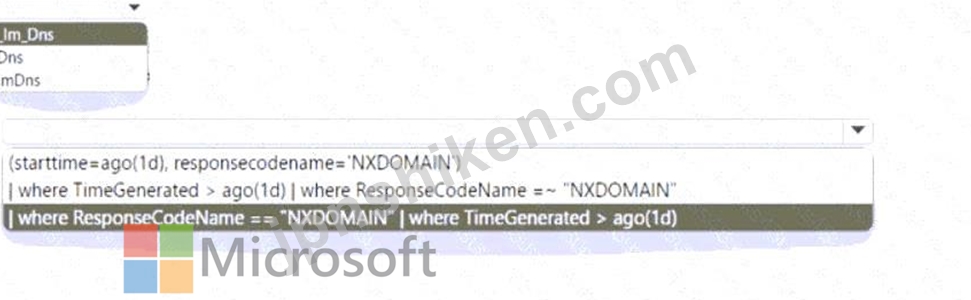
When you deploy the ASIM unifying parser for DNS , you should query the normalized schema via the function imDns() (ASIM convention: im < Domain > ). To maximize performance , pass filtering arguments directly to the parser so the function prunes data early at source, ra ther than piping a large dataset into subsequent where filters. ASIM DNS supports parameters such as starttime , endtime , and responsecodename (for example, NXDOMAIN ). Therefore, using imDns(starttime=ago(1d), responsecodename= ' NXDOMAIN
' ) limits ingestion t o the last 24 hours and only events whose ResponseCodeName equals NXDOMAIN .
Once normalized rows are returned, use summarize with bin() to aggregate efficiently. The ASIM DNS schema exposes the client address as SrcIpAddr ; grouping by this field and bin(TimeGenerated, 15m) produces per-source-IP counts in 15-minute buckets. The final query:
imDns(starttime=ago(1d), responsecodename= ' NXDOMAIN ' )
| summarize count() by SrcIpAddr, bin(TimeGenerated, 15m)
meets all requirements: it lists all DNS events with NXDOMAIN in the last 24 hours and aggregates them by source IP in 15-minute intervals , using ASIM's parameterized parser to achieve optimal performance.

- 質問一覧「178問」
- 質問1 次のインシデントを含む Microsoft Sentinel ワークスペースがあ...
- 質問2 経営陣の問題を調査するには、高度なハンティングクエリを作成す
- 質問3 SW1という名前のMicrosoft Sentinelワークスペースがあります。 ...
- 質問4 新しいAzureサブスクリプションを作成し、Azure Monitor用のログ...
- 質問5 お客様は、Microsoft Defender XDRを使用するMicrosoft 365 E5サ...
- 質問6 注: この質問は、同じシナリオを示す一連の質問の一部です。この...
- 質問7 イメージ ファイルを使用した潜在的な攻撃に関するセキュリティ
- 質問8 技術要件を満たすためには、現在発生している攻撃に対処する必要
- 質問9 Sub1という名前のAzureサブスクリプションがあり、そこではMicro...
- 質問10 ユーザーの皆様が受信する悪質なメールが増加していることをお知
- 質問11 Microsoft Defender XDR のカスタム検出ルールに、以下の KQL ク...
- 質問12 Azure Defender から Key Vault のアラートを受け取ります。 複...
- 質問13 以下の表に示すリソースが利用可能です。 (Exhibit) SW1では、重...
- 質問14 Microsoft Defender for Servers Plan 1 を使用し、Server1 とい...
- 質問15 User1 という名前のユーザーを含む Azure サブスクリプションが...
- 質問16 お客様は、Microsoft Defender XDRを使用するMicrosoft 365 E5サ...
- 質問17 サードパーティのセキュリティ情報およびイベント管理 (SIEM) ソ...
- 質問18 あなたはMicrosoft 365のサブスクリプションをお持ちです。 あな...
- 質問19 Azure Sentinel を構成しています。 サインイン リスク イベント...
- 質問20 次の環境があります。 アズールセンチネル Microsoft 365 サブス...
- 質問21 お客様は、Microsoft Defender XDR を使用する Microsoft 365 サ...
- 質問22 カスタム Kusto クエリを含む workspace1 という名前の Microsof...
- 質問23 デフォルトのデータ保持期間が30日間に設定されているMicrosoft ...
- 質問24 Azure仮想マシンの技術要件を満たすソリューションを提案する必...
- 質問25 Server1 のイベント監視を設定する必要があります。ソリューショ...
- 質問26 Sub1という名前のAzureサブスクリプションがあり、それがcontoso...
- 質問27 Microsoft Defender for Endpoint を使用する Microsoft 365 E5 ...
- 質問28 Sub1 という名前の Azure サブスクリプションがあり、そこには次...
- 質問29 お客様は、Microsoft Copilot for Security を使用する Microsof...
- 質問30 Azure Security Center が特定のセキュリティ警告を受信したとき...
- 質問31 新しい Azure サブスクリプションで Linux 仮想マシンをプロビジ...
- 質問32 Microsoft Defender for Cloudを使用するAzureサブスクリプショ...
- 質問33 ビジネス要件を満たすようにDC1を設定する必要があります。 どの...
- 質問34 お客様は、Microsoft Copilot for Security を使用する Microsof...
- 質問35 1,000 台の Windows 10 デバイスを含む Microsoft 365 サブスク...
- 質問36 お客様は、Microsoft Defender XDR および Microsoft Defender f...
- 質問37 DNSリクエストに対してASIMクエリを実装する必要があります。ソ...
- 質問38 あなたは、Microsoft Copilot for Security を使用する Microsof...
- 質問39 Microsoft Sentinelを使用するAzureサブスクリプションがあり、...
- 質問40 オンプレミスのLinuxサーバーがあり、そのサーバーはApp1という...
- 質問41 Microsoft 365 Defender を使用する Microsoft 365 サブスクリプ...
- 質問42 UEBAを使用するためのMicrosoft Sentinelの要件を満たすには、Se...
- 質問43 お客様は、Microsoft Sentinelを使用するAzureサブスクリプショ...
- 質問44 お客様は、Microsoft Defender for Cloudを使用するAzureサブス...
- 質問45 お客様は、Microsoft 365 Defenderを使用するMicrosoft 365サブ...
- 質問46 Azure Sentinel で脅威を検出するためのカスタム分析ルールがあ...
- 質問47 Microsoft Defender for Endpoint を使用する Microsoft 365 E5 ...
- 質問48 Microsoft Defender for Cloud の要件を満たすには、Account! に...
- 質問49 お客様は、Microsoft Defender for Office 365を使用するMicroso...
- 質問50 Microsoft Sentinelワークスペースをお持ちです。 KQLクエリがあ...
- 質問51 注: この質問は、同じシナリオを示す一連の質問の一部です。この...
- 質問52 Microsoft Sentinelワークスペースの名前はWorkspacesです。 Wor...
- 質問53 技術要件を満たすためには、ログイン失敗に関するクエリを完了す
- 質問54 以下の表に示すリソースが利用可能です。 (Exhibit) お客様は、M...
- 質問55 Microsoft Defender for Office 365 に安全な添付ファイル ポリ...
- 質問56 Microsoft 365 Defender を使用する Microsoft 365 E5 サブスク...
- 質問57 ユーザー「User1」と「WS1」という名前のMicrosoft Sentinelワー...
- 質問58 Microsoft Sentinelワークスペースをお持ちです。 Microsoft Def...
- 質問59 お客様は、DB1 という名前のデータベース サーバーを含む Micros...
- 質問60 お客様は、Microsoft Defender 36S を使用する Microsoft 365 E5...
- 質問61 Azure Sentinel でハンティング クエリを作成します。 ハンティ...
- 質問62 あなたはMicrosoft 365 B5サブスクリプションをお持ちです。統合...
- 質問63 あなたはMicrosoft 365 E5のサブスクリプションをお持ちです。 ...
- 質問64 注: この質問は、同じシナリオを示す一連の質問の一部です。この...
- 質問65 Microsoft Sentinelの要件を満たすために、ハンティングクエリを...
- 質問66 Microsoft Sentinelワークスペースの名前はWorkspacesです。 組...
- 質問67 あなたの会社では Azure Security Center と Azure Defender を...
- 質問68 お客様のオンプレミスネットワークにはHyper-Vクラスターが存在...
- 質問69 Microsoft Defender for Cloud Apps を使用し、Cloud Discovery ...
- 質問70 Microsoft Defender for Cloud を使用し、Windows Server を実行...
- 質問71 技術要件を満たすためには、ContosoとFabrikam向けにMicrosoft S...
- 質問72 注: この質問は、同じシナリオを示す一連の質問の一部です。この...
- 質問73 Azure Sentinel データを視覚化し、サードパーティのデータ ソー...
- 質問74 あなたは、User1とUser2という2人のユーザーを含むMicrosoft 365...
- 質問75 お客様は、以下のリソースを含む Azure サブスクリプションをお...
- 質問76 お客様は、Microsoft Defender for Cloudが有効になっているAzur...
- 質問77 お客様は、Microsoft Defender for Endpoint Plan Zを使用するMi...
- 質問78 Azure Sentinel の要件を満たすテスト ルールを作成する必要があ...
- 質問79 あなたは、vm1とvm2という名前の2つの仮想マシンを含むAzureサブ...
- 質問80 Microsoft Exchange Online と Microsoft Defender for Office 3...
- 質問81 Azure DevOps 組織があり、その中に Repo1 という名前の Azure R...
- 質問82 あなたはMicrosoft 365 Defenderを使用してインシデントを調査し...
- 質問83 お客様は、Microsoft Defender XDRを使用するMicrosoft 365 E5サ...
- 質問84 Microsoft 365のサブスクリプションを購入します。 Microsoft Cl...
- 質問85 Azure Sentinel で脅威を検出するためのカスタム分析ルールを作...
- 質問86 Sub1 という名前の Azure サブスクリプションがあります。Sub1 ...
- 質問87 お客様は、Microsoft Defender XDR を使用する Azure サブスクリ...
- 質問88 Azure Active Directory (Azure AD) ユーザーをブロックするため...
- 質問89 お客様は、Microsoft Exchange Onlineを使用するMicrosoft 365 E...
- 質問90 App1 の Microsoft Sentinel 要件を満たす必要があります。App1 ...
- 質問91 お客様は、Microsoft Defender for Endpointを使用するMicrosoft...
- 質問92 お客様のAzureサブスクリプションには、以下の表に示すユーザー...
- 質問93 Microsoft Sentinelを使用します。 Azure Storage アカウント キ...
- 質問94 Microsoft Sentinelワークスペースをお持ちです Parser1という名...
- 質問95 お客様は、Microsoft Defender XDRを使用するMicrosoft 365 E5サ...
- 質問96 お客様は、Microsoft Defender XDRを使用するMicrosoft 365 E5サ...
- 質問97 Sub1という名前のAzureサブスクリプションがあり、そこではMicro...
- 質問98 Microsoft Sentinelワークスペースを含むAzureサブスクリプショ...
- 質問99 アプリケーション開発中に複数のAzure Functionsアプリからアク...
- 質問100 サポートされているすべてのリソースの種類に対して Azure Defen...
- 質問101 あなたはAzureサブスクリプションをお持ちです。 以下の要件を満...
- 質問102 ゲストユーザー「User1」とMicrosoft Sentinelワークスペース「w...
- 質問103 お客様は、Microsoft Defender for Cloudが有効になっているAzur...
- 質問104 Azure サブスクリプションを作成します。 サブスクリプションに...
- 質問105 Microsoft Defender for Endpoint Plan 2 を使用する Microsoft ...
- 質問106 注: この質問は、同じシナリオを示す一連の質問の一部です。この...
- 質問107 組織内の他のユーザーがサインインに使用したことのない場所から
- 質問108 Microsoft Sentinelワークスペースをお持ちです。 過去3時間以内...
- 質問109 Azure Defenderの要件とビジネス要件を満たすためには、Azure De...
- 質問110 お客様は、Microsoft Defender for Endpoint Plan 2 を使用する ...
- 質問111 Microsoft Defender for Cloud の要件とビジネス要件を満たすた...
- 質問112 機密ファイルの外部共有に応じてアラートを生成し、修復アクショ
- 質問113 不審なIPアドレスからのサインインが検出された場合は、Microsof...
- 質問114 お客様の環境には、Microsoft Defender for Endpoint にオンボー...
- 質問115 SW1という名前のMicrosoft Sentinelワークスペースがあります。 ...
- 質問116 Azure Defender を使用する Microsoft 365 サブスクリプションが...
- 質問117 Microsoft Copilot for Security を使用する Microsoft 365 E5 ...
- 質問118 Microsoft Defender XDR を使用する Microsoft 365 サブスクリプ...
- 質問119 あなたはMicrosoft Exchange Onlineを使用するMicrosoft 365 E5...
- 質問120 Microsoft Sentinel を使用する Azure サブスクリプションがあり...
- 質問121 Microsoft Defender XDR を使用する Microsoft 365 B5 サブスク...
- 質問122 Microsoft Defender for Endpointの要件を満たすには、CLIENT1上...
- 質問123 あなたはMicrosoft 365のサブスクリプションをお持ちです。 サー...
- 質問124 Microsoft Defender for Cloud が有効になっている Microsoft サ...
- 質問125 あなたは、Device1 という名前のデバイスを含む Microsoft 365 E...
- 質問126 お客様の環境には、Windows Serverを実行するオンプレミスサーバ...
- 質問127 Log Analytics ワークスペースを含む Azure サブスクリプション...
- 質問128 あなたの会社には、Microsoft Defender for Identity を使用する...
- 質問129 お客様は、WS1 という名前の Microsoft Sentinel ワークスペース...
- 質問130 お客様はAzure Defenderを使用するAzureサブスクリプションをお...
- 質問131 以下のKQLクエリを含むカスタム検出ルールがあります。 (Exhibit...
- 質問132 Microsoft Defender for Cloudを使用するAzureサブスクリプショ...
- 質問133 Microsoft Sentinelの要件を満たすには、どのルール設定を構成す...
- 質問134 サードパーティ製のセキュリティ情報およびイベント管理(SIEM)ソ...
- 質問135 sws1 という名前の Microsoft Sentinel ワークスペースがありま...
- 質問136 Microsoft Sentinelの要件を満たすために、どの平均時間メトリッ...
- 質問137 Azure Sentinel ワークスペースがあります。 Azure portal でプ...
- 質問138 アプリケーション開発中に複数のAzure Functionsアプリからアク...
- 質問139 お客様は、Microsoft 365 Defender for Endpointを使用するMicro...
- 質問140 お客様は、Microsoft Defender XDRを使用するMicrosoft 365 E5サ...
- 質問141 貴社はMicrosoft Sentinelを使用しています 新任のセキュリティ...
- 質問142 お客様は、Microsoft Defender XDRを使用するMicrosoft 365 E5サ...
- 質問143 お客様は、Microsoft Sentinelを使用するAzureサブスクリプショ...
- 質問144 あなたはMicrosoft 365 E5のサブスクリプションをお持ちです。 M...
- 質問145 あなたの会社では Azure Sentinel を使用しています。 新しいセ...
- 質問146 お客様は、Microsoft Defender XDRを使用するMicrosoft 365 E5サ...
- 質問147 あなたはMicrosoft 365 Defenderを使用してインシデントを調査し...
- 質問148 セキュリティ管理者は、ストレージ アカウントにアップロードさ
- 質問149 注: この質問は、同じシナリオを示す一連の質問の一部です。この...
- 質問150 User1とUser2という2人のユーザーと、workspace1というMicrosoft...
- 質問151 Azure Sentinelの要件を満たすには、イベントにメモを追加する必...
- 質問152 Azure Sentinelの要件とビジネス要件を満たすには、admin1にロー...
- 質問153 sws1 という名前の Microsoft Sentinel ワークスペースがありま...
- 質問154 あなたはMicrosoft 365のサブスクリプションをお持ちです。 グル...
- 質問155 Microsoft Defender for DevOps を使用する Azure DevOps 組織が...
- 質問156 Azure サブスクリプションには、app1 という名前の Azure ロジッ...
- 質問157 Azure Defender を使用しています。 機密情報を含む Azure スト...
- 質問158 Microsoft Defender for Endpoint を使用する Microsoft 365 E5 ...
- 質問159 オンプレミスの Windows 11 Pro デバイス (Device1 という名前) ...
- 質問160 Azure Sentinel を使用しています。 組み込みロールを使用して、...
- 質問161 お客様は、Microsoft Defender for Endpointに登録された200台の...
- 質問162 Azure Information Protectionの要件を満たす必要があります。最...
- 質問163 Azure Activityコネクタを使用してトリガーされるMicrosoft Sent...
- 質問164 Microsoft Sentinelワークスペースには、以下のAdvanced Securit...
- 質問165 Workspace1という名前のMicrosoft Sentinelワークスペースがあり...
- 質問166 Microsoft Sentinelワークスペースを含むAzureサブスクリプショ...
- 質問167 注: この質問は、同じシナリオを示す一連の質問の一部です。この...
- 質問168 Azure Security Center には、テストに使用される 10 台の仮想マ...
- 質問169 指定された緊急時対応アカウントを監視するには、Microsoft Sent...
- 質問170 お客様は、contoso.com という名前の Microsoft Entra テナント...
- 質問171 sub1では、workspace1という名前のLog Analyticsワークスペース...
- 質問172 ある企業がMicrosoft 365アプリを使用して分析を行いたいと考え...
- 質問173 Microsoft Sentinelワークスペースに、Workbook1という名前のカ...
- 質問174 Azure Sentinel に Playbook があります。 プレイブックをトリガ...
- 質問175 あなたはMicrosoft 365 E5のサブスクリプションをお持ちです。 ...
- 質問176 お客様のネットワークには、Azure ADと同期するオンプレミスのAc...
- 質問177 Microsoft 365 E5 サブスクリプションと Microsoft Sentinel ワ...
- 質問178 お客様は、Microsoft Defender for Endpointを使用するAzureサブ...
