- ホーム
- Microsoft
- MS-102J - Microsoft 365 Administrator (MS-102日本語版)
- Microsoft.MS-102J.v2026-10-06.q284
- 質問247
有効的なMS-102J問題集はJPNTest.com提供され、MS-102J試験に合格することに役に立ちます!JPNTest.comは今最新MS-102J試験問題集を提供します。JPNTest.com MS-102J試験問題集はもう更新されました。ここでMS-102J問題集のテストエンジンを手に入れます。
MS-102J問題集最新版のアクセス
「598問、30% ディスカウント、特別な割引コード:JPNshiken」
contoso.com という名前の Microsoft Entra テナントがあり、次の表に示すようにテナント間アクセスが構成されています。

貴社にはFabrikamとAdatum Corporationという2つのパートナー組織があります。FabrikamはMicrosoftと提携しています。
fabrikam.com という名前の 365 ドメインがあります。データムは、adatum.com という名前の Microsoft 365 ドメインを持っています。
fabrikam.com のテナント間アクセスは、以下の表に示すように設定します。

以下の各記述について、正しい場合は「はい」を選択してください。そうでない場合は「いいえ」を選択してください。

貴社にはFabrikamとAdatum Corporationという2つのパートナー組織があります。FabrikamはMicrosoftと提携しています。
fabrikam.com という名前の 365 ドメインがあります。データムは、adatum.com という名前の Microsoft 365 ドメインを持っています。
fabrikam.com のテナント間アクセスは、以下の表に示すように設定します。
以下の各記述について、正しい場合は「はい」を選択してください。そうでない場合は「いいえ」を選択してください。
正解:
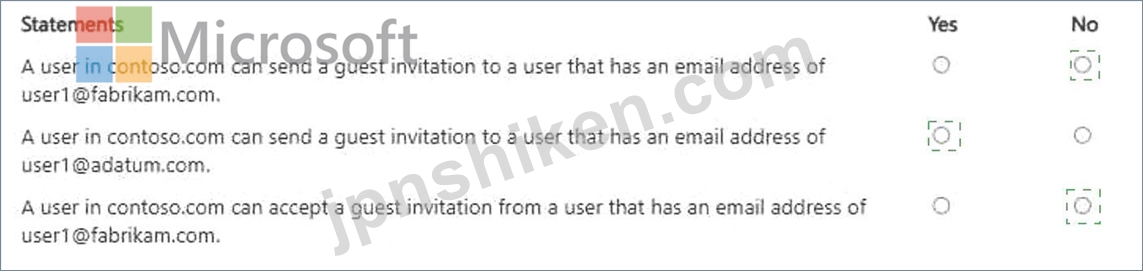
Explanation:
Statement
Answer
A user in contoso.com can send a guest invitation to a user that has an email address of [email protected].
No
A user in contoso.com can send a guest invitation to a user that has an email address of [email protected].
Yes
A user in contoso.com can accept a guest invitation from a user that has an email address of user1@fabrikam.
com.
No
This question is testing B2B collaboration, not B2B direct connect. A guest invitation creates or uses a B2B collaboration guest relationship. Microsoft states that cross-tenant access settings determine both inbound access by external users to your resources and outbound access by your users to external organizations.
Inbound access controls whether users from an external Microsoft Entra organization can access resources in your tenant, while outbound access controls whether your users can access resources in an external organization. Microsoft also states that default cross-tenant access settings apply to all external organizations unless organization-specific settings exist.
For fabrikam.com, organization-specific settings override the default settings. Because Inbound B2B collaboration is All blocked, a Contoso user cannot invite a Fabrikam user as a guest into Contoso. Therefore, the first statement is No. For adatum.com, no organization-specific blocking rule is shown, so the default tenant setting applies; B2B collaboration is enabled by default for external Microsoft Entra organizations, so the second statement is Yes.
For the third statement, a Contoso user accepting an invitation from Fabrikam means the Contoso user is accessing Fabrikam as an external guest, which uses Outbound B2B collaboration from Contoso to Fabrikam.
Since outbound B2B collaboration for fabrikam.com is All blocked, the answer is No.

- 質問一覧「284問」
- 質問1 Microsoft 365 E5 サブスクリプションをお持ちです。メールが有...
- 質問2 技術要件を満たすように Office on the Web を構成する必要があ...
- 質問3 EU PII データの技術要件を満たす必要があります。 何を作成する...
- 質問4 Microsoft 365 サブスクリプションをお持ちです。 次の図に示す...
- 質問5 貴社は、comoso.onmicrosoft.com という名前の Microsoft Entra ...
- 質問6 お客様のオンプレミスネットワークには、Contoso.com という名前...
- 質問7 御社はモントリオール、シアトル、ニューヨーク市にオフィスを構
- 質問8 あなたは、User1という名前のユーザーを含むMicrosoft 365サブス...
- 質問9 Windows 10 デバイスのコンプライアンス要件を満たす必要があり...
- 質問10 オンプレミス ネットワークには Active Directory ドメインが含...
- 質問11 注: このセクションには、同じシナリオと問題に関する 1 つ以上...
- 質問12 Microsoft 365 E5 サブスクリプションがあり、Microsoft Defende...
- 質問13 Microsoft Defender for Endpoint を使用する Microsoft 365 サ...
- 質問14 Windows 10 バージョン 2004 がプレインストールされている新し...
- 質問15 Microsoft Intune を使用する Microsoft 365 E5 サブスクリプシ...
- 質問16 User1 という名前のユーザーと次の表に示す管理者を含む Microso...
- 質問17 Sitel という名前の Microsoft SharePoint サイトを含む Microso...
- 質問18 Microsoft 365 テナントには、Group1 と Group2 という名前の 2 ...
- 質問19 あなたは Contoso, Ltd. という名前の会社で働いています。 Cont...
- 質問20 セキュリティとセキュリティを使用する Microsoft 365 サブスク...
- 質問21 貴社はオンプレミスサーバーとMicrosoft Entraテナントを所有し...
- 質問22 Microsoft 365 E5 テナントがあります。 クレジット カード番号...
- 質問23 あなたは、User1という名前のユーザーを含むMicrosoft 365サブス...
- 質問24 Microsoft Defender for Endpoint が Microsoft Endpoint Manage...
- 質問25 貴社はcontoso.onmicrosoft.comという名前のMicrosoft Entraテナ...
- 質問26 Windows 10 デバイスが 2,500 台あり、Microsoft 365 E5 テナン...
- 質問27 ネットワークには 3 つの Active Directory フォレストが含まれ...
- 質問28 Microsoft 365 サブスクリプションをお持ちです。 次の要件を満...
- 質問29 Microsoft Defender for Office 365 を使用し、Mailbox1 という...
- 質問30 あなたはMicrosoft 365 E5のサブスクリプションをお持ちです。 M...
- 質問31 2,000 人を超えるゲスト ユーザーを含む Microsoft 365 サブスク...
- 質問32 Device1 という名前の Windows 11 デバイスが含まれる Microsoft...
- 質問33 注: この質問は、同じシナリオを示す一連の質問の一部です。この...
- 質問34 Microsoft Intune を使用する Microsoft 365 E5 テナントがあり...
- 質問35 Microsoft 365 E5 サブスクリプションをお持ちです。 ユーザーが...
- 質問36 Microsoft 365 E5 サブスクリプションをお持ちです。 次の要件を...
- 質問37 あなたの会社は Microsoft 365 サブスクリプションを持っていま...
- 質問38 次の表に示すユーザーを含む Microsoft 365 サブスクリプション...
- 質問39 ホットスポット あなたはMicrosoft 365のサブスクリプションをお...
- 質問40 お客様は、以下の表に示すユーザーを含む Microsoft 365 E5 サブ...
- 質問41 お客様は、Contoso.com という名前の Microsoft Entra ID (Micro...
- 質問42 ホットスポット 次の表に示すユーザーを含む Microsoft 365 E5 ...
- 質問43 Microsoft Defender for Endpoint を使用し、次の表に示すデバイ...
- 質問44 User1 と User2 という名前の 2 人のユーザーを含む Microsoft 3...
- 質問45 Microsoft Intune を使用する Microsoft 365 E5 テナントがあり...
- 質問46 Microsoft 365 E5 テナントがあります。 次の図に示すように、デ...
- 質問47 Microsoft 365 E5 テナントがあります。 ISO 27001:2013 テンプ...
- 質問48 Microsoft 365 E5 サブスクリプションをお持ちです。 Microsoft ...
- 質問49 Microsoft 365 E5 サブスクリプションをお持ちです。 すべてのユ...
- 質問50 あなたの会社には複数のオフィスがあります。 デバイス管理に Mi...
- 質問51 Group1とGroup2という2つのセキュリティグループを含むMicrosoft...
- 質問52 Microsoft 365 E5 サブスクリプションをお持ちです。 Microsoft ...
- 質問53 次の表に示すグループを含む Microsoft 365 E5 サブスクリプショ...
- 質問54 ホットスポット お客様のネットワークには、オンプレミスのActiv...
- 質問55 Microsoft 365 E5 サブスクリプションをお持ちです。 すべてのデ...
- 質問56 (ネットワークには、contoso という名前のオンプレミスの Active...
- 質問57 お客様のネットワークには、オンプレミスのActive Directoryドメ...
- 質問58 Microsoft 365 サブスクリプションをお持ちです。 Microsoft Def...
- 質問59 貴社は、contoso.com という名前の Microsoft Entra テナントを...
- 質問60 Microsoft Defender for Office 365 を使用する Microsoft 365 ...
- 質問61 ネットワークには Active Directory フォレストが含まれています...
- 質問62 Microsoft J65 E5 サブスクリプションをお持ちです。 Microsoft ...
- 質問63 次の図に示すように、3 つの自動保持ポリシーを持つ Microsoft 3...
- 質問64 お客様は、以下の表に示すデバイスを含む Microsoft 365 E5 サブ...
- 質問65 Azure ATP センサーはどのサーバーにインストールする必要があり...
- 質問66 Microsoft 365 E5 サブスクリプションをお持ちです。 次の要件を...
- 質問67 Microsoft 365 F5 サブスクリプションをお持ちです。 あなたは 1...
- 質問68 Microsoft 365 テナントがあります。 会社のポリシーでは、すべ...
- 質問69 注: この質問は、同じシナリオを示す一連の質問の一部です。この...
- 質問70 contoso.com という名前の Microsoft Entra テナントにリンクさ...
- 質問71 Office 365 では Microsoft Defender を使用します。 攻撃シミュ...
- 質問72 contoso.com というドメインを含む Microsoft 365 ES サブスクリ...
- 質問73 次の表に示すように、Microsoft エンドポイント マネージャーに ...
- 質問74 次の表に示すデバイスを含む Microsoft 365 E5 サブスクリプショ...
- 質問75 Group1 というグループを含む Microsoft 365 E5 サブスクリプシ...
- 質問76 ホットスポット Group1 という名前の Microsoft 365 グループを...
- 質問77 Microsoft 365 E5 サブスクリプションが Microsoft Entra ID (Mi...
- 質問78 次の表に示すユーザーを含む Microsoft 365 E5 サブスクリプショ...
- 質問79 Microsoft 365 サブスクリプションをお持ちです。 Enterprise Mo...
- 質問80 Microsoft 365 E5 サブスクリプションをお持ちです。 次の要件を...
- 質問81 注:この問題は、同じシナリオを提示する一連の問題の一部です。
- 質問82 どのサーバーで Defender for ID センサーを使用する必要があり...
- 質問83 Microsoft Intune に登録されたデバイスを含む Microsoft 365 テ...
- 質問84 お客様は、contoso.com という名前の Microsoft Entra テナント...
- 質問85 ホットスポット あなたの会社では、100 人のユーザーを含む従来...
- 質問86 Microsoft 365 サブスクリプションをお持ちです。 Group! という...
- 質問87 Windows 11 デバイスを含む Microsoft 365 E5 サブスクリプショ...
- 質問88 次の表に示すユーザーを含む Microsoft 365 E5 テナントがありま...
- 質問89 Microsoft 365 E5 サブスクリプションをお持ちです。 次の表に示...
- 質問90 お客様は、Microsoft Entra IDansidential Threat Protection (A...
- 質問91 次の表に示すアラートを含む Microsoft 365 サブスクリプション...
- 質問92 お客様のネットワークには、contoso という名前のオンプレミスの...
- 質問93 ネットワークにはcontoso.comというActive Directoryドメインが...
- 質問94 あなたの会社は 5 つの都市にオフィスを構えています。 会社には...
- 質問95 多要素認証 (MFA) の使用を評価しています。 次の各ステートメン...
- 質問96 Site1 という名前の SharePoint サイトを含む Microsoft 365 E5 ...
- 質問97 あなたはMicrosoft 365のサブスクリプションをお持ちです。 すべ...
- 質問98 100 台の Windows 10 デバイスを含む Microsoft 365 テナントが...
- 質問99 Device1 という名前の Windows 10 デバイスと、次の表に示す Mic...
- 質問100 Microsoft 365 サブスクリプションをお持ちです。 機密データが...
- 質問101 お客様は、以下の表に示すデバイスを含む Microsoft 365 E5 サブ...
- 質問102 Microsoft 365 E5 テナントがあります。 機密ラベルは、機密ラベ...
- 質問103 モバイル デバイス管理用に登録されたデバイスを含む Microsoft ...
- 質問104 次の表に示すユーザーを含む Microsoft 365 サブスクリプション...
- 質問105 注:この問題は、同じシナリオを提示する一連の問題の一部です。
- 質問106 ハイブリッド Microsoft Entra テナントにリンクされた Azure サ...
- 質問107 Microsoft Defender for Cloud Apps を使用する Microsoft 365 E...
- 質問108 Site1 という名前の Microsoft SharePoint Online サイトを含む ...
- 質問109 Microsoft 365 E5 テナントがあります。 ユーザーがマルウェアを...
- 質問110 次の表に示すグループを含む Microsoft 365 テナントがあります...
- 質問111 ユーザー1が技術要件を満たすデバイスを登録できるようにする必
- 質問112 注: この質問は、同じシナリオを示す一連の質問の一部です。この...
- 質問113 Site1 という名前の Microsoft SharePoint Online サイトを含む ...
- 質問114 注:この問題は、同じシナリオを提示する一連の問題の一部です。
- 質問115 貴社には本社が3つと支店が1つあります。支店は研究目的で使用さ...
- 質問116 あなたはMicrosoft 365 E5サブスクリプションをご利用で、Micros...
- 質問117 Microsoft 365 E5 サブスクリプションをお持ちです。 Microsoft ...
- 質問118 Microsoft intune を使用する Microsoft 365 E5 サブスクリプシ...
- 質問119 あなたはMicrosoft 365のサブスクリプションをお持ちです。 App1...
- 質問120 Microsoft 365 サブスクリプションをお持ちです。 次の図に示す...
- 質問121 Microsoft 365 サブスクリプションをお持ちです。 ネットワーク...
- 質問122 次の表に示すグループを含む Microsoft 365 テナントがあります...
- 質問123 Microsoft Entra ID Protectionの週刊ダイジェストメールを有効...
- 質問124 Group1とGroup2という2つのグループを含むMicrosoft 365 E5サブ...
- 質問125 Microsoft 365 サブスクリプションをお持ちです。 contoso.com ...
- 質問126 Microsoft 365 ES テナントがあります。 次の図に示すアラートが...
- 質問127 ネットワークには Contoso という名前の Active Directory フォ...
- 質問128 サードパーティの多要素認証 (MFA) 製品を使用する Microsoft 36...
- 質問129 お客様は、contoso.onmicrosoft.com という名前の Microsoft Ent...
- 質問130 米国、ヨーロッパ、アジアのユーザーを含む Microsoft 365 E5 サ...
- 質問131 お客様のネットワークには、contoso.local という名前のオンプレ...
- 質問132 ホットスポット Microsoft 365 サブスクリプションをお持ちです...
- 質問133 Microsoft 365 サブスクリプションをお持ちです。 導入スコアを...
- 質問134 ホットスポット 次の表に示すユーザーを含む Microsoft 365 サブ...
- 質問135 Microsoft Intune を使用する Microsoft 365 E5 サブスクリプシ...
- 質問136 あなたの会社は Microsoft 365 E5 サブスクリプションを持ってい...
- 質問137 Microsoft 365 E5 サブスクリプションをお持ちです。 貴社の Mic...
- 質問138 ホットスポット 会社では Microsoft Defender for Endpoint を使...
- 質問139 会社には Microsoft 365 E5 サブスクリプションがあります。 会...
- 質問140 User1 という名前のユーザーを含む Microsoft 365 E5 サブスクリ...
- 質問141 次の表に示すユーザーを含む Microsoft 365 サブスクリプション...
- 質問142 Microsoft 365 サブスクリプションがあり、Microsoft Defender f...
- 質問143 お客様は、以下の表に示すユーザーを含む Microsoft 365 E5 サブ...
- 質問144 Microsoft Intune と Microsoft Defender XDR が含まれる Micros...
- 質問145 あなたはMicrosoft 365 E5のサブスクリプションをお持ちです。 ...
- 質問146 外部ユーザーとのクレジット カード情報の共有を保護するデータ
- 質問147 Microsoft 365 テナントがあります。 Endpoint Protection デバ...
- 質問148 User1 という名前のユーザーを含む Microsoft 365 E5 サブスクリ...
- 質問149 注: このセクションには、同じシナリオと問題を扱う1つ以上の質...
- 質問150 Microsoft 365 E5 サブスクリプションをお持ちです。 Microsoft ...
- 質問151 お客様のネットワークには、オンプレミスのActive Directoryドメ...
- 質問152 Microsoft Purview コンプライアンス ポータルから、Policy 1 と...
- 質問153 500 台の Windows 10 デバイスを含む Microsoft 365 E5 テナント...
- 質問154 Microsoft 365 E5 サブスクリプションがあり、Microsoft Defende...
- 質問155 Microsoft 365 E5 サブスクリプションをお持ちです。 Microsoft ...
- 質問156 ホットスポット Microsoft 365 E3 サブスクリプションをお持ちで...
- 質問157 次の表に示すデバイスを含む Microsoft 365 E5 サブスクリプショ...
- 質問158 Microsoft Defender for Office 365 を使用する Microsoft 365 E...
- 質問159 Microsoft Defender XDR が含まれる Microsoft 365 サブスクリプ...
- 質問160 Microsoft 365 E5 サブスクリプションをお持ちです。 ユーザーの...
- 質問161 User1 という名前のユーザーを含む Microsoft 365 E5 サブスクリ...
- 質問162 次の表に示すセキュリティ グループを含む Microsoft 365 E5 サ...
- 質問163 Microsoft 365 E5 サブスクリプションをお持ちで、Microsoft Def...
- 質問164 Admin1 という名前のユーザーを含む Microsoft 365 E5 サブスク...
- 質問165 注:この問題は、同じシナリオを提示する一連の問題の一部です。
- 質問166 Microsoft 365 E5 サブスクリプションをお持ちです。 ユーザーが...
- 質問167 ホットスポット Microsoft 365 E5 サブスクリプションをお持ちで...
- 質問168 営業部門のすべてのユーザーが Project1 と Project2 中に正常に...
- 質問169 次の表に示すユーザーを含む Microsoft 365 E5 サブスクリプショ...
- 質問170 ログ分析の技術要件を満たす必要があります。 Microsoft Cloud A...
- 質問171 Microsoft 365 E5 サブスクリプションをお持ちです。 条件付きア...
- 質問172 あなたの会社にはシアトルとデンバーにオフィスがあります。 Mic...
- 質問173 Microsoft 365 E5 サブスクリプションがあり、その中に user1@co...
- 質問174 あなたの会社には Microsoft E5 テナントがあります。 企業は IS...
- 質問175 Microsoft 365 E5 サブスクリプションがあり、Microsoft Purview...
- 質問176 Microsoft Intune に登録された 500 台の Android デバイスを含...
- 質問177 adatum.com というドメイン名を使用する Microsoft 365 サブスク...
- 質問178 Microsoft 365 サブスクリプションをお持ちです。 Microsoft 365...
- 質問179 あなたはMicrosoft 365のサブスクリプションをお持ちです。 この...
- 質問180 あなたはMicrosoft 365 ESのサブスクリプションをお持ちです。 M...
- 質問181 あなたはMicrosoft 365 E5のサブスクリプションをお持ちです。 ...
- 質問182 Microsoft 365 E5 サブスクリプションをお持ちです。このサブス...
- 質問183 セキュリティ管理者向けに解決策を提案する必要があります。その
- 質問184 User1 という名前のユーザーを含む Microsoft 365 E5 サブスクリ...
- 質問185 あなたは、Label1 と Label2 という名前の 2 つの機密ラベルを含...
- 質問186 Microsoft 365 E5 テナントがあります。 機密の個人データを含む...
- 質問187 ネットワークには、contoso.com という名前のオンプレミスの Act...
- 質問188 次の図に示すように、フィッシング対策ポリシーを構成します。 (...
- 質問189 Microsoft 365 テナントと LinkedIn 会社ページがあります。 Lin...
- 質問190 ネットワークにはオンプレミスの Active Directory ドメインが含...
- 質問191 お客様は、Microsoft 365 Multi-Geo を使用する Microsoft 365 ...
- 質問192 ネットワークには、contoso.com という名前のオンプレミスの Act...
- 質問193 次の図に、Microsoft Defender XDR レポートのスケジュールを示...
- 質問194 あなたはMicrosoft 365 E5のサブスクリプションをお持ちです。 ...
- 質問195 注: この質問は、同じシナリオを示す一連の質問の一部です。この...
- 質問196 お客様はMicrosoft 365 E5サブスクリプションと、contoso.comと...
- 質問197 Microsoft 365 E5 サブスクリプションをお持ちです。 次の図に示...
- 質問198 Microsoft 365 E5 テナントがあります。 機密ラベルを構成します...
- 質問199 お客様は、以下のサービスを利用するMicrosoft 365サブスクリプ...
- 質問200 ネットワークには Active Directory ドメインが含まれています。...
- 質問201 Microsoft 365 テナントがあります。 Microsoft 365 セキュリテ...
- 質問202 Intune で自動登録を構成する必要があります。ソリューションは...
- 質問203 お客様は、Microsoft Intuneに登録された500台のWindowsデバイス...
- 質問204 あなたはMicrosoft 365 E5サブスクリプションをご利用で、Office...
- 質問205 次の表に示すユーザーを含む Microsoft 365 E5 サブスクリプショ...
- 質問206 注: この質問は、同じシナリオを示す一連の質問の一部です。この...
- 質問207 ホットスポット Microsoft 365 テナントがあります。 次の図に示...
- 質問208 Microsoft 365 E5 テナントがある データ投げ捨て防止 (DLP) ポ...
- 質問209 Microsoft 365 E5 サブスクリプションをお持ちです。 クラウド ...
- 質問210 User1 という名前のユーザーを含む Microsoft 365 E5 サブスクリ...
- 質問211 注:この問題は、同じシナリオを提示する一連の問題の一部です。
- 質問212 あなたの会社には Microsoft 365 E5 テナントがあります。 ユー...
- 質問213 Microsoft Endpoint Managerには、複数のデバイスが登録されてい...
- 質問214 Microsoft 36S E5 サブスクリプションをお持ちです。 次の表に示...
- 質問215 Microsoft 365 テナントがあります。 Microsoft 365 セキュリテ...
- 質問216 100 台の Windows 10 デバイスを含む Microsoft 365 E5 テナント...
- 質問217 注: この質問は、同じシナリオを示す一連の質問の一部です。この...
- 質問218 Microsoft 365 E5 サブスクリプションをお持ちです。 グループの...
- 質問219 注: この質問は、同じシナリオを示す一連の質問の一部です。この...
- 質問220 Microsoft 365 E5 サブスクリプションをお持ちです。 次の設定を...
- 質問221 Microsoft 365 E5 サブスクリプションがあり、その中には Micros...
- 質問222 お客様のオンプレミスネットワークには、Active Directoryドメイ...
- 質問223 あなたはMicrosoft 365のサブスクリプションをお持ちです。 あな...
- 質問224 注: このセクションには、同じシナリオと問題に関する 1 つ以上...
- 質問225 あなたはMicrosoft 365 E5のサブスクリプションをお持ちです。 ...
- 質問226 500 台の Windows 10 デバイスと Windows 10 コンプライアンス ...
- 質問227 次の表に示すデバイスを含む Microsoft 365 E5 テナントがありま...
- 質問228 Microsoft 365 サブスクリプションをお持ちです。 Microsoft Exc...
- 質問229 あなたの会社には 3 つの本社と 1 つの支社があります。支社は研...
- 質問230 次の表に示すように、Microsoft Intune に登録された 5 台のデバ...
- 質問231 Microsoft 365 E5 サブスクリプションをお持ちです。 次の要件を...
- 質問232 Device1 という名前の Windows 10 デバイスと、次の表に示す Mic...
- 質問233 お客様は、以下の表に示すユーザーを含む、Microsoft 365 のハイ...
- 質問234 User1 という名前のユーザーと、次の表に示す管理者を含む Micro...
- 質問235 ネットワークにはオンプレミスの Active Directory ドメイン サ...
- 質問236 セキュリティとセキュリティからコンプライアンス管理センターで
- 質問237 次の表に示すユーザーを含む Microsoft 365 サブスクリプション...
- 質問238 Microsoft 365 サブスクリプションをお持ちです。 [ヘッダーの設...
- 質問239 Microsoft Defender for Endpoint を使用します。 次の表に示す ...
- 質問240 次の表に示すユーザーを含む Microsoft 365 E5 テナントがありま...
- 質問241 あなたは、User1という名前のユーザーを含むMicrosoft 365 E5サ...
- 質問242 ホットスポット Microsoft 365 サブスクリプションをお持ちです...
- 質問243 注: このセクションには、同じシナリオと問題に関する 1 つ以上...
- 質問244 Microsoft 365 E5 サブスクリプションをお持ちです。 Mailbox1 ...
- 質問245 注:この問題は、同じシナリオを提示する一連の問題の一部です。
- 質問246 あなたはMicrosoft 365 E5のサブスクリプションをお持ちです。 ...
- 質問247 contoso.com という名前の Microsoft Entra テナントがあり、次...
- 質問248 エンドポイント セキュリティを使用する Microsoft 365 E5 サブ...
- 質問249 次のユーザーを含む Microsoft 365 E5 サブスクリプションがあり...
- 質問250 Youi ネットワークには Active Directory ドメインが含まれてい...
- 質問251 Microsoft 365 E5 テナントがあります。 顧客データに関する欧州...
- 質問252 注: この質問は、同じシナリオを示す一連の質問の一部です。この...
- 質問253 Microsoft Defender for Office 365 を使用する Microsoft 365 ...
- 質問254 注: この質問は、同じシナリオを示す一連の質問の一部です。この...
- 質問255 Microsoft 365 E5 サブスクリプションをお持ちです。 サポートさ...
- 質問256 あなたはMicrosoft 365テナントをお持ちです。 Microsoft Defend...
- 質問257 Microsoft Defender for Endpoint を使用する Microsoft 365 E5 ...
- 質問258 あなたはMicrosoft 365 E5のサブスクリプションをお持ちです。 ...
- 質問259 あなたはMicrosoft 365のサブスクリプションをお持ちです。 すべ...
- 質問260 Site1 という名前の Microsoft SharePoint Online サイトを含む ...
- 質問261 Microsoft Intune に登録された 1,000 台の iOS デバイスを含む ...
- 質問262 Microsoft 365 サブスクリプションをお持ちです。 onmicrosoft.c...
- 質問263 次の表に示すユーザーを含む Microsoft 365 E5 サブスクリプショ...
- 質問264 お客様は、以下の表に示すユーザーを含む Microsoft 365 E5 サブ...
- 質問265 コンプライアンス要件を満たすには、条件付きアクセス ポリシー
- 質問266 Microsoft 365 サブスクリプションをお持ちです。 一部の外部ユ...
- 質問267 次の表に示す管理単位を含む Microsoft 365 サブスクリプション...
- 質問268 Microsoft Entra ID (Microsoft Entra ID) でセキュリティの既定...
- 質問269 あなたの会社には Microsoft 365 テナントがあります Engineerin...
- 質問270 お客様は、Contoso.com という名前の Microsoft Entra ID (Micro...
- 質問271 注: この質問は、同じシナリオを示す一連の質問の一部です。この...
- 質問272 Site1 と Site2 という名前の 2 つの Microsoft SharePoint Onli...
- 質問273 Microsoft 365 テナントがあります。 Microsoft Intune に登録す...
- 質問274 ホットスポット あなたはMicrosoft 365 E5のサブスクリプション...
- 質問275 次の表に示すユーザーを含む Microsoft 365 E5 サブスクリプショ...
- 質問276 Microsoft J65 E5 サブスクリプションをお持ちです。 Microsoft ...
- 質問277 Microsoft エンドポイント マネージャーを使用して管理されてい...
- 質問278 Microsoft 365 サブスクリプションをお持ちです。 サブスクリプ...
- 質問279 次の表に示す ID を含む Microsoft 365 E5 サブスクリプションが...
- 質問280 Sitel という名前の Microsoft SharePoint サイトを含む Microso...
- 質問281 Microsoft 365 E5 サブスクリプションがあり、Microsoft Defende...
- 質問282 Admin1 と Admin2 という名前の 2 人のユーザーを含む Microsoft...
- 質問283 Microsoft 365 E5 サブスクリプションをお持ちです。 あなたは、...
- 質問284 ホットスポット あなたの会社には Microsoft 365 E5 サブスクリ...
