- ホーム
- Microsoft
- DP-600J - Implementing Analytics Solutions Using Microsoft Fabric (DP-600日本語版)
- Microsoft.DP-600J.v2026-09-08.q113
- 質問16
有効的なDP-600J問題集はJPNTest.com提供され、DP-600J試験に合格することに役に立ちます!JPNTest.comは今最新DP-600J試験問題集を提供します。JPNTest.com DP-600J試験問題集はもう更新されました。ここでDP-600J問題集のテストエンジンを手に入れます。
DP-600J問題集最新版のアクセス
「212問、30% ディスカウント、特別な割引コード:JPNshiken」
顧客とその銀行口座残高に関するデータを含む、Model1という名前のセマンティックモデルがあります。
モデル1には、以下のテーブルと列があります。
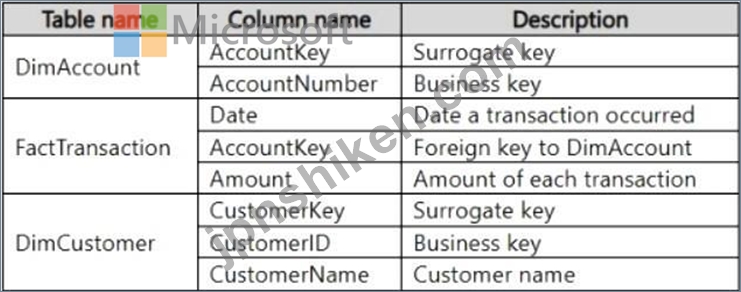
顧客は1つまたは複数のアカウントを持つことができます。各アカウントは複数の顧客に関連付けることができます。
ユーザーがModel1を照会して、顧客ごとの取引合計金額を特定できるようにする必要があります。
モデル1には何を追加すべきでしょうか?
モデル1には、以下のテーブルと列があります。
顧客は1つまたは複数のアカウントを持つことができます。各アカウントは複数の顧客に関連付けることができます。
ユーザーがModel1を照会して、顧客ごとの取引合計金額を特定できるようにする必要があります。
モデル1には何を追加すべきでしょうか?
正解:B
We need to define a many-to-many relation between DimAccount and DimCustomer. This can be done using a bridge table.
Note: Relate many-to-many dimensions
The classic many-to-many scenario relates two entities, for example bank customers and bank accounts. Consider that customers can have multiple accounts, and accounts can have multiple customers. When an account has multiple customers, they're commonly called joint account holders.
Modeling these entities is straight forward. One dimension table stores accounts, and another dimension table stores customers. As is characteristic of dimension tables, there's a unique identifier (ID) column in each table. To model the relationship between the two tables, a third table is required. This table is commonly referred to as a bridging table. In this example, it's purpose is to store one row for each customer-account association.
Reference:
https://learn.microsoft.com/en-us/power-bi/guidance/relationships-many-to-many

- 質問一覧「113問」
- 質問1 ドラッグアンドドロップ問題 Fabricテナントには、Model1という...
- 質問2 ホットスポットに関する質問 Fabric には Warehouse1 という名前...
- 質問3 次の図に示すようなPythonコードと出力を含むFabricノートブック...
- 質問4 Fabricテナントには、Lakehouse1という名前の湖畔の家が含まれて...
- 質問5 複数のレポートを作成するために使用するMicrosoft Power BIファ...
- 質問6 ホットスポットに関する質問 contoso.com という名前の Microsof...
- 質問7 ホットスポットに関する質問 WH1という名前の倉庫を含むFabricテ...
- 質問8 Microsoft Power BI Desktop に、Order_Date と Shipping_Date ...
- 質問9 注:この問題は、同じシナリオを提示する一連の問題の一部です。
- 質問10 ホットスポットに関する質問 以下の図に示すようなソースデータ
- 質問11 注:この問題は、同じシナリオを提示する一連の問題の一部です。
- 質問12 DB1という名前のAzure SQLデータベースと、Workspace1という名前...
- 質問13 ホットスポットに関する質問 Fabricテナントには、Warehouse1と...
- 質問14 ホットスポットに関する質問 Workspace1 という名前の Fabric ワ...
- 質問15 ドラッグアンドドロップ問題 Dataflow Gen2クエリを含むFabricワ...
- 質問16 顧客とその銀行口座残高に関するデータを含む、Model1という名前...
- 質問17 Tenant1という名前のFabricテナントがあり、その中にLakehouse1...
- 質問18 事例研究1 - コントソ 概要 Contoso, Ltd.は、米国に拠点を置く...
- 質問19 ホットスポットに関する質問 以下のKQLクエリがあります。 (Exhi...
- 質問20 ホットスポットに関する質問 FabricワークスペースにWarehouse1...
- 質問21 Workspace1 という名前の Fabric ワークスペースがあり、そこに...
- 質問22 データフローのパフォーマンスを監視する際、ボトルネックの可能
- 質問23 セマンティックモデルを含むMicrosoft Power BIプロジェクトがあ...
- 質問24 Microsoft Power BI で Power Query データフローを扱う場合、パ...
- 質問25 Fabricウェアハウスには、Table1という名前のテーブルがあります...
- 質問26 FabricワークスペースにWorkspace1という名前があり、その中にLa...
- 質問27 ドラッグアンドドロップ問題 Fabricには、Workspace1、Workspace...
- 質問28 あなたはFabricを使ってデータを保存する予定です。 以下の機能...
- 質問29 セマンティックモデルを含むFabricテナントをお持ちです。このモ...
- 質問30 ホットスポットに関する質問 あなたは、湖畔の家が2軒あるFabric...
- 質問31 ドラッグアンドドロップ問題 あなたは「Lakehouse1」という名前...
- 質問32 タイプ 1 のゆっくりと変化するディメンション (SCD) のデータ読...
- 質問33 Microsoft Power BI セマンティック モデルに Date という名前の...
- 質問34 複雑なセマンティックモデルを含むFabricテナントがあります。こ...
- 質問35 空のマテリアライズドビューを作成する際の主な特徴は何ですか?
- 質問36 ホットスポットに関する質問 FabricウェアハウスにTable1という...
- 質問37 ホットスポットに関する質問 あなたはLakehouse1という名前のFab...
- 質問38 ホットスポットに関する質問 セマンティックモデルを含むFabric...
- 質問39 ドラッグアンドドロップ問題 FabricのEventhouse1という名前のイ...
- 質問40 注:この問題は、同じシナリオを提示する一連の問題の一部です。
- 質問41 Fabricテナントには、Workspace1という名前のワークスペースが含...
- 質問42 ホットスポットに関する質問 お客様は、以下のデータを含むFabri...
- 質問43 ホットスポットに関する質問 definition.pbir という名前のファ...
- 質問44 OneLakeに30個のCSVファイルを含むFabricテナントをお持ちです。...
- 質問45 ホットスポットに関する質問 storage1という名前のAzure Data La...
- 質問46 Workspace1という名前のFabricワークスペースがあり、その中に以...
- 質問47 Fabricワークスペースに、Report1という名前のMicrosoft Power B...
- 質問48 Workspace1 と Workspace2 という名前の 2 つのワークスペースを...
- 質問49 ドラッグアンドドロップ問題 T-SQLステートメントを使用してAzur...
- 質問50 Tenant1という名前のFabricテナントがあり、その中にWS1という名...
- 質問51 注:この問題は、同じシナリオを提示する一連の問題の一部です。
- 質問52 ホットスポットに関する質問 Fabricテナントをお持ちです。 次の...
- 質問53 Fabricテナントには、Workspace1とWorkspace2という名前の2つの...
- 質問54 ホットスポットに関する質問 デフォルトのSparkスタータープール...
- 質問55 Fabricテナントには、Workspace1という名前のワークスペースが含...
- 質問56 Repo1 という名前の Azure Repos リポジトリと、Fabric が有効に...
- 質問57 ホットスポットに関する質問 以下のT-SQLステートメントがありま...
- 質問58 注:この問題は、同じシナリオを提示する一連の問題の一部です。
- 質問59 ドラッグアンドドロップ問題 Fabricテナントには、Report1という...
- 質問60 倉庫を含む Fabric テナントがあります。 一日に何度も。すべて...
- 質問61 Microsoft Power BI のセマンティック モデルには、Orders とい...
- 質問62 事例研究1 - コントソ 概要 Contoso, Ltd.は、米国に拠点を置く...
- 質問63 ホットスポットに関する質問 Fabric ウェアハウスには Sales.Ord...
- 質問64 Fabricテナントをお持ちです。 Azure Data Factory パイプライン...
- 質問65 ホットスポットに関する質問 Fabricテナントには、model1という...
- 質問66 データ パイプラインを含むファブリック テナントがあります。 ...
- 質問67 ホットスポットに関する質問 Fabricテナントには、Workspace1と...
- 質問68 Microsoft Power BI のセマンティック モデルにメジャーが含まれ...
- 質問69 Lakehouse1 という名前のレイクハウスを含む Fabric テナントが...
- 質問70 事例研究1 - コントソ 概要 Contoso, Ltd.は、米国に拠点を置く...
- 質問71 事例研究2 - Litware, Inc. 概要 Litware, Inc.は北米各地にオフ...
- 質問72 ホットスポットに関する質問 Fabricテナントをお持ちです。 あな...
- 質問73 Fabric内のSQLクエリエディタで、複数の独立したクエリバッチを...
- 質問74 あなたは、bucket1 という名前の Amazon Simple Storage Service...
- 質問75 ホットスポットに関する質問 Fabricテナントには、Workspace_DEV...
- 質問76 FabricテナントにLakehouse1という名前の湖畔の家が含まれていま...
- 質問77 Fabricテナントには、Workspace1という名前のワークスペースとUs...
- 質問78 あなたは湖畔の家を含むFabricテナントを所有しています。 ビジ...
- 質問79 Fabricテナントをお持ちです。 Fabric Data Factoryパイプライン...
- 質問80 注:この問題は、同じシナリオを提示する一連の問題の一部です。
- 質問81 ローカル コンピューター上のフォルダーにソース データがありま...
- 質問82 事例研究1 - コントソ 概要 Contoso, Ltd.は、米国に拠点を置く...
- 質問83 Fabricテナントをお持ちです。 Pipeline1という名前のデータパイ...
- 質問84 Fabricテナントには、Warehouse1という名前のウェアハウスが含ま...
- 質問85 お客様は、Microsoft Power BI Premium 容量を使用する Fabric ...
- 質問86 Model1という名前のカスタムDirect Lakeセマンティックモデルが...
- 質問87 ホットスポットに関する質問 Fabric ウェアハウスには Sales.Pro...
- 質問88 ドラッグアンドドロップ問題 Fabricテナントには、DW1という名前...
- 質問89 Microsoft Power BI Desktop に、Order_Date と Shipping_Date ...
- 質問90 ホットスポットに関する質問 Fabricテナントには、Workspace1と...
- 質問91 ホットスポットに関する質問 あなたはLH1という名前の湖畔の家を...
- 質問92 事例研究1 - コントソ 概要 Contoso, Ltd.は、米国に拠点を置く...
- 質問93 ホットスポットに関する質問 Fabricテナントには、Enterpriseと...
- 質問94 注:このセクションには、同じシナリオと問題に関する複数の質問
- 質問95 Fabricテナントには、OneLakeにParquetファイルとして保存された...
- 質問96 Microsoft Power BI のセマンティック モデルをお持ちです。 モ...
- 質問97 Fabricワークスペースに「Workspace1」という名前があります。 M...
- 質問98 ホットスポットに関する質問 Fabricテナントには、Notebook1とい...
- 質問99 注: このセクションには、同じシナリオと問題に関する 1 つ以上...
- 質問100 Fabricテナントには、Report1という名前のMicrosoft Power BIレ...
- 質問101 ビジュアルクエリエディターの2つの制限事項は何ですか?(2つ選...
- 質問102 あなたの会社には財務部があります。 Fabricテナント、storage1...
- 質問103 事例研究2 - Litware, Inc. 概要 Litware, Inc.は北米各地にオフ...
- 質問104 あなたはFabricノートブック内のデータを分析しています。 Spark...
- 質問105 あなたは、DW1という名前の倉庫とLH1という名前の湖畔の家を含む...
- 質問106 事例研究1 - コントソ 概要 Contoso, Ltd.は、米国に拠点を置く...
- 質問107 事例研究2 - Litware, Inc. 概要 Litware, Inc.は北米各地にオフ...
- 質問108 FabricワークスペースにDirectQueryセマンティックモデルが含ま...
- 質問109 ドラッグアンドドロップ問題 Fabricテナントには、Development、...
- 質問110 あなたは、Lakehouse1 という名前のレイクハウスを含む Fabric ...
- 質問111 Microsoft Fabric の Power Query エディターのデータ プロファ...
- 質問112 ホットスポットに関する質問 Microsoft Power BI のセマンティッ...
- 質問113 事例研究2 - Litware, Inc. 概要 Litware, Inc.は北米各地にオフ...
