- ホーム
- CompTIA
- CS0-003J - CompTIA Cybersecurity Analyst (CySA+) Certification Exam (CS0-003日本語版)
- CompTIA.CS0-003J.v2026-10-17.q218
- 質問11
有効的なCS0-003J問題集はJPNTest.com提供され、CS0-003J試験に合格することに役に立ちます!JPNTest.comは今最新CS0-003J試験問題集を提供します。JPNTest.com CS0-003J試験問題集はもう更新されました。ここでCS0-003J問題集のテストエンジンを手に入れます。
CS0-003J問題集最新版のアクセス
「517問、30% ディスカウント、特別な割引コード:JPNshiken」
セキュリティチームは、環境に存在する脆弱性のリストを精査しており、CVSS v4.0の指標に基づいて修復の優先順位を決定したいと考えています。
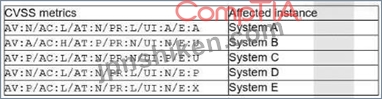
セキュリティ管理者は、以下の脆弱性のうちどれを最初に修正するよう依頼すべきでしょうか?
セキュリティ管理者は、以下の脆弱性のうちどれを最初に修正するよう依頼すべきでしょうか?
正解:C
Using CVSS v4.0, the highest-priority remediation is typically the vulnerability that is most remotely exploitable and requires the least attacker effort (low complexity, no special conditions, low/no privileges, and no user interaction).
System D is the strongest "fix first" candidate because it combines:
* AV:N (Network) # remotely exploitable over the network; severity increases the more remote the attacker can be.
* AC:L (Low) # easier to exploit than High complexity.
* AT:N (None) # "does not depend on deployment/execution conditions"; attacker can expect the exploit to work under most instances.
* PR:L (Low) # only basic user privileges required (still relatively accessible).
* UI:N (None) # most important differentiator vs System A. CVSS v4.0 explicitly states: "The resulting score is greatest when no user interaction is required."
* E:P (Proof-of-Concept) # publicly available PoC code exists (more exploitable than "Unreported"), increasing urgency compared to U.
Why not System A (the closest competitor)?
System A is also AV:N/AC:L/AT:N/PR:L, but it has UI:A (Active), meaning exploitation requires a targeted user to perform specific actions. CVSS v4.0 defines Active (A) as requiring "specific, conscious interactions... or actively subvert protection mechanisms." System D's UI:N makes it exploitable purely at the attacker's will, which CVSS treats as more severe.
Why the others are lower priority
* System B (AV:A, AC:H, AT:P): adjacent-only, high complexity, and attack requirements present # significantly harder/less broadly exploitable.
* System C (AV:P) and System E (AV:P): require physical access, which reduces the pool of potential attackers and generally lowers priority versus network-exploitable issues.
References (Official CVSS v4.0 specification used):
* FIRST, CVSS v4.0 Specification Document:
* User Interaction values (None/Passive/Active) and "score is greatest when no user interaction is required"
* Attack Requirements (AT) definitions (None vs Present)
* Exploit Maturity (E) values (X/A/P/U) and meanings
* Attack Vector remoteness increases severity

- 質問一覧「218問」
- 質問1 インシデント対応チームは、法執行機関と協力して、現在発生して
- 質問2 事件対応の調査および報告段階において、既存の証拠を適切に取り
- 質問3 脅威アクターの行動を伝達するために一般的に使用される 4 つの...
- 質問4 API を使用してファイルから ID 管理システムに一括アクセス要求...
- 質問5 発電所の遠心ポンプを駆動する組み込みソフトウェアに必要な保証
- 質問6 社内機器に関するインシデントが発生したため、インシデント対応
- 質問7 次の証拠収集方法のうち、裁判で最も受け入れられる可能性が高い
- 質問8 販売アプリケーションの重大な脆弱性に対処するため、修正作業が
- 質問9 根本原因分析を最もよく表すのは次のどれですか?
- 質問10 セキュリティ アナリストは、最近のゼロデイ攻撃などの悪用から
- 質問11 セキュリティチームは、環境に存在する脆弱性のリストを精査して
- 質問12 新しい EDR にアップグレードした後、セキュリティ アナリストは...
- 質問13 調査を開始するとき、最初に行う必要があるのは次のうちどれです
- 質問14 ゼロデイ コマンド インジェクションの脆弱性が公開されました。...
- 質問15 インシデント発生時にミッションクリティカルなサービスを確実に
- 質問16 SOC 顧客サービス評価の結果、通常の勤務時間後に提供される一貫...
- 質問17 脅威ハンターは、組織の環境にインストールされた新しい永続化メ
- 質問18 セキュリティアナリストが、同社のウェブサイトに以下の脆弱性を
- 質問19 インシデント対応レポートを提供する際のタイムラインの重要性を
- 質問20 複数の脆弱性スキャンレポートで、コード実行中にランタイムエラ
- 質問21 次のうち、統合されたダッシュボードを更新するために使用される
- 質問22 セキュリティ運用マネージャーが自動化の使用を検討する可能性が
- 質問23 セキュリティアナリストがノートパソコンの脆弱性を特定していま
- 質問24 脆弱性スキャン レポートに含める必要がある項目は次のうちどれ
- 質問25 インシデント対応を第三者にアウトソーシングする際に、組織がSL...
- 質問26 ある従業員が、デスクトップを従来のWindowsのクラシックな外観...
- 質問27 攻撃者が悪用に成功したターゲットとの通信を確立しようとするの
- 質問28 セキュリティアナリストがユーザーのコンピュータのフォレンジッ
- 質問29 Web 開発者は、新しいアプリケーションをテストしているときに開...
- 質問30 ある企業の機密性や業務上の重要性が低い公開ウェブサイトの1つ
- 質問31 財務部門の従業員 2 名が、マルウェアが組み込まれたフリーウェ...
- 質問32 過去1時間で、重要なサーバー上で大量のRDP認証失敗が記録されま...
- 質問33 最近の侵入テストでは、数人の従業員が電話で促されると特定の W...
- 質問34 悪用が多発していた2つの脆弱性に対するパッチが、同じ金曜日の
- 質問35 サイバーセキュリティ アナリストは、同社が取引していない国か
- 質問36 攻撃を受けた後、アナリストは最高情報セキュリティ責任者にイベ
- 質問37 リスク評価の結果、以下の特徴を持つ脆弱なレガシーシステムをホ
- 質問38 ある企業は、過去の傾向分析に重点を置くことでトリアージ時間を
- 質問39 ある企業は、次のことを支援するエージェントベースのエンドポイ
- 質問40 セキュリティ アナリストは、確立された SLA を満たす脆弱性パッ...
- 質問41 最近ランサムウェアの標的となったある企業のセキュリティ チー
- 質問42 セキュリティ アナリストは月次脆弱性レポートを受け取りました
- 質問43 システム管理者は、データセンター サーバーからの営業時間外の
- 質問44 ゼロ トラスト アーキテクチャの一部としてのネットワーク マイ...
- 質問45 ペネトレーション テスターが Web アプリケーションのフォームに...
- 質問46 インシデント対応プロセスの封じ込め段階の主な目標を最もよく表
- 質問47 インシデント後の教訓を学ぶステップに含めるべき重要な側面は次
- 質問48 システム管理者がデータセンターのサーバーからの営業時間外のト
- 質問49 アーキテクチャ チームには、フィッシング インシデントのトリア...
- 質問50 新しいサイバーセキュリティ アナリストは、組織に対する潜在的
- 質問51 ある会社の顧客配信リストに多数のメールが送信されました。顧客
- 質問52 セキュリティ アナリストは、特権アカウントからの次のアクティ
- 質問53 SOC は、ユーザー アカウントが安全でない通信を通じて会社の ID...
- 質問54 セキュリティ チームは、企業 Web サイトに対する最近のレイヤー...
- 質問55 ある組織のセキュリティアナリストがWebサーバーのログをレビュ...
- 質問56 インシデント対応報告およびコミュニケーション プログラムの有
- 質問57 アナリストは、次のエンドポイント ログ エントリを確認します。...
- 質問58 最高情報セキュリティ責任者は、企業内のシャドウ IT を排除し、...
- 質問59 組織外への PII の漏洩を防ぐために最も効果的なツールは次のう...
- 質問60 セキュリティオペレーションセンターのアナリストはスキャンレポ
- 質問61 従業員が会社支給のノートパソコンを不正使用した疑いがある。人
- 質問62 組織は、無効なデータ、予期しないデータ、またはランダムなデー
- 質問63 悪意のある攻撃者がソーシャル エンジニアリングを使用して内部
- 質問64 にするには、次のどれが最適ですか?
- 質問65 他のすべてのオプションを評価した後に考慮すべきリスク管理の決
- 質問66 セキュリティアナリストがウェブサーバーのログを調査中に、次の
- 質問67 サイバーセキュリティ アナリストが、最近侵害を受けたサーバー
- 質問68 セキュリティアナリストが Nikto スキャンの次の結果を確認しま...
- 質問69 アナリストがWindowsホスト上で実行されているプロセスを調査し...
- 質問70 セキュリティ アナリストは、侵害の可能性があるときに発生した
- 質問71 攻撃者が LAN 上の syslog サーバーにアクセスしたところです。s...
- 質問72 セキュリティ アナリストは、会社のラップトップ上で不審なアク
- 質問73 組織内における脆弱性管理の報告とコミュニケーションに関連する
- 質問74 セキュリティ アナリストは、インシデントに関連するデジタル証
- 質問75 ある企業のユーザーアカウントが侵害されました。また、ユーザー
- 質問76 監査担当者がサイバー犯罪に関連する証拠記録を精査している。監
- 質問77 医療施設で発生したセキュリティインシデントにおいて、権限のな
- 質問78 あるユーザーが過去1週間にわたり継続的に大量のネットワーク帯
- 質問79 セキュリティ マネージャーは、侵入テストと演習中の会社のネッ
- 質問80 インシデント対応チームは重大なセキュリティ インシデントへの
- 質問81 セキュリティ アナリストは、組織に影響を与えた新しいマルウェ
- 質問82 あるアナリストがウェブサイトを調査し、以下の結果を出しました
- 質問83 SOC アナリストは、デバイスのオペレーティング システムに関係...
- 質問84 インシデント後の分析と改善のプロセス中に組織が異なる社内部門
- 質問85 セキュリティ アナリストは、監査プロセスのために企業のネット
- 質問86 サイバーセキュリティアナリストは、Webアプリケーションをスキ...
- 質問87 サイバーセキュリティ侵害に関する最近のインシデントに関する「
- 質問88 電子メール クライアントを最新のパッチに更新した後、従業員の
- 質問89 セキュリティアナリストが次の不審なアクティビティを検出しまし
- 質問90 根本原因分析を実施する最適な理由は次のうちどれですか?
- 質問91 アナリストは、敵対的手法を実行する権限のあるチームに対して監
- 質問92 ウェブアプリケーションチームがSOCアナリストに対し、公開ウェ...
- 質問93 アナリストは、新しいゼロデイ脅威に関する最近の政府警告を確認
- 質問94 パッチ適用は午前 2 時から午前 4 時までの間にのみ行われるとい...
- 質問95 サイバー保険を購入することで、次のリスク管理原則が達成される
- 質問96 技術者は、PCI 監査用の一般的なネットワーク マッピング ツール...
- 質問97 違反を追跡および分析するプロセスを確立するときに、アラートの
- 質問98 ある企業は脆弱性管理プログラムを導入中ですが、セキュリティ
- 質問99 セキュリティアナリストが、Webサーバーに対して実行された脆弱...
- 質問100 システム アナリストは、Windows 環境でシステム構成キーと値へ...
- 質問101 ある組織が、大量のデータがネットワーク外に送信されていること
- 質問102 セキュリティ プログラムは、セキュリティ制御を SIEM に統合す...
- 質問103 地理的に多様な従業員と動的 IP を抱える企業は、ネットワーク ...
- 質問104 MITRE ATT&CK フレームワークを最もよく説明しているのは次...
- 質問105 セキュリティアナリストが、ホストベースのIDSログに以下の不審...
- 質問106 ある組織でデータ漏洩が発生し、その結果、P11が一般に公開され...
- 質問107 会社所有・管理のノートパソコンにマルウェア感染の疑いがある。
- 質問108 サイバー キル チェーンの方法論を最も正確に説明しているのは次...
- 質問109 アナリストは、企業ネットワークの外側にある IP アドレスが、外...
- 質問110 セキュリティ アナリストは、ネットワーク ルーティング上の異常...
- 質問111 セキュリティアナリストは、出張中の従業員の異常なアカウントア
- 質問112 セキュリティアナリストは、顧客のネットワーク上でマルウェアが
- 質問113 セキュリティアナリストがクラウド環境のセキュリティ評価を行っ
- 質問114 アナリストは、不正行為の疑いのある従業員のシステムから取得し
- 質問115 セキュリティ アナリストが Web サーバーのログを確認していると...
- 質問116 インシデント対応者は、ネットワーク トラフィックを通じてバイ
- 質問117 セキュリティアナリストは、DNSログの定期的なレビュー中に、ホ...
- 質問118 セキュリティ アナリストがネットワーク上の脆弱性スキャンを実
- 質問119 アナリストは、次の Web サーバー ログ エントリを確認します。 ...
- 質問120 SOC アナリストに現実的なトレーニングを提供するための最適な方...
- 質問121 新しい SOC マネージャーは、改善を行うために、前回のテーブル...
- 質問122 企業は、サードパーティから侵入テストレポートの概要を受け取り
- 質問123 次のどれを使用すると、さまざまなアプリケーションや内部アプリ
- 質問124 アナリストは、悪意があることが知られている IP アドレスが複数...
- 質問125 最近発見されたゼロデイ脆弱性が現在積極的に悪用されており、ユ
- 質問126 不満を抱いたオープンソース開発者が、ワイパーとして機能するロ
- 質問127 従業員が、会社を狙ったマルウェアを含むフィッシングメールを受
- 質問128 セキュリティアナリストは、USBインターフェースを介してソフト...
- 質問129 次のセキュリティ運用タスクのうち、自動化に最適なものはどれで
- 質問130 企業には次のセキュリティ要件があります。 。パブリックIPはあ...
- 質問131 インシデント対応チームは、インターネット障害の調査を開始する
- 質問132 以下の文書のうち、重要なビジネスプロセスを特定し、それらのプ
- 質問133 ある会社が社内ネットワークで新しいアプリケーションを立ち上げ
- 質問134 サイバーセキュリティ アナリストは SIEM ログを調査し、内部ホ...
- 質問135 セキュリティ業務における人的介入を最小限に抑え、プロセス改善
- 質問136 SOC マネージャーは、脆弱性を管理するための報告プロセスを確立...
- 質問137 セキュリティアナリストは、特定のユーザーによる複数回のMFAロ...
- 質問138 エンドユーザーが組織のポリシーで許可されていないウェブサイト
- 質問139 セキュリティアナリストが、同じ企業および地域に属する複数の送
- 質問140 すべてのネットワーク ユーザーが既知のソースからの添付ファイ
- 質問141 IT担当者がLinuxのtopコマンドの出力結果を確認しています。この...
- 質問142 SOC アナリストは、重複を削除することで、報告されたアラームの...
- 質問143 脆弱性管理チームは評価中に4つの重大な脆弱性を発見し、今後の
- 質問144 規制の厳しい企業において、セキュリティインシデントの影響を最
- 質問145 ある組織は、過去1年間に複数の重大なシステム障害が発生したこ
- 質問146 レポートには、Web アプリケーションの特定のバージョンの脆弱性...
- 質問147 機密データへのアクセスを保護するための最適な認証方法はどれで
- 質問148 ある企業が、自社の機密情報がダークウェブ上で売買されているこ
- 質問149 セキュリティ アナリストは最近、Arachni を使用して、新しく開...
- 質問150 脆弱性アナリストはシステム脆弱性のリストを受け取り、それらの
- 質問151 セキュリティ管理者は、IT運用部門から、一部の脆弱性レポートに...
- 質問152 セキュリティ アナリストがフィッシングメールを調査中に、進行
- 質問153 最高情報セキュリティ責任者 (CISO) は、企業の業種をターゲット...
- 質問154 DevOpsアナリストが、リポジトリへの送信に対してコードの脆弱性...
- 質問155 セキュリティ アナリストは、組織の SIEM を構成しているときに...
- 質問156 最高情報セキュリティ責任者は、SQLインジェクション、FRI、XSS...
- 質問157 アナリストは、最近の脆弱性スキャンに基づいて推奨事項を提供す
- 質問158 アナリストは複数のシステムのイベントを調査していますが、デー
- 質問159 サイバーセキュリティ アナリストは、DLP プロジェクト チームに...
- 質問160 侵入テストの最終レポートを確認した後、サイバーセキュリティ
- 質問161 脆弱性管理チームは、内部評価に基づいて、実稼働環境への展開前
- 質問162 MTTDがインシデント報告とコミュニケーションにどのように影響す...
- 質問163 セキュリティ管理者は、会社の外部向けポータルに対する辞書攻撃
- 質問164 ウェブサーバーのログを確認中に、セキュリティアナリストが次の
- 質問165 SOARソリューションを導入することで実現できるプロセス改善は、...
- 質問166 ある企業のインターネット向けWebアプリケーションが、設計上の...
- 質問167 ウェブアプリケーションには、内部URLからコンテンツを取得し、...
- 質問168 開発作業がほとんど完了していないレガシー Web アプリケーショ...
- 質問169 SOC(セキュリティオペレーションセンター)は、ワークステーショ...
- 質問170 従業員が Web サイトにアクセスしたため、デバイスが侵入的なマ...
- 質問171 社内に開発チームを持つ企業で安全なソフトウェア開発ライフサイ
- 質問172 組織が CSIRT を活性化しました。セキュリティアナリストは、単...
- 質問173 インシデント対応アナリストが別のアナリストから調査を引き継い
- 質問174 セキュリティ アナリストは、同じ国の IP アドレスを識別するシ...
- 質問175 複数のSaaSアプリケーションのクラウド移行に際し、組織のシステ...
- 質問176 セキュリティ アナリストは、重要なシステム上の FIM によってト...
- 質問177 ある企業は、一般に公開されている機密ファイルの保管場所を見つ
- 質問178 機密情報を含む複数のレポートがファイル共有サービスを通じて流
- 質問179 セキュリティアナリストが、インフラストラクチャチームが新しい
- 質問180 ある組織の最高経営責任者は最近、パッチがリリースされてから約
- 質問181 セキュリティ チームが異なるベンダー プラットフォーム間でアク...
- 質問182 情報セキュリティ プログラムを成功させるための重要な要素を最
- 質問183 サイバーセキュリティアナリストは、リンクや添付ファイルを含む
- 質問184 攻撃者は、技術フォーラムから収集したオープンソースの情報を用
- 質問185 会社のウイルス対策ソフトによって適切に阻止されなかった新たな
- 質問186 セキュリティアナリストは、ゲートウェイからパケットキャプチャ
- 質問187 サイバーセキュリティ チームは最近、オペレーティング システム...
- 質問188 SOC は、従業員の資格情報がダーク Web で見つかったことを示す...
- 質問189 ある組織が電子商取引アプリケーションのパイロット展開を実施し
- 質問190 侵入分析のダイヤモンド モデルの利点は次のどれですか?
- 質問191 セキュリティ チームは、サイバー攻撃が発生した場合にチームが
- 質問192 既知の脅威を所定の期間内に修復する必要があるプロセスを最もよ
- 質問193 ある組織が弁護士から法的保留要請を受け取りました。この要請は
- 質問194 セキュリティ アナリストは、Web アプリケーションの脆弱性スキ...
- 質問195 脆弱性管理チームは、毎週のスキャンで見つかったすべての脆弱性
- 質問196 セキュリティ アナリストが、組織の POS アプリケーションで中程...
- 質問197 セキュリティアナリストが、Webサーバーで受信した異常に多いリ...
- 質問198 セキュリティアナリストが脆弱性スキャンを実施しました。以下の
- 質問199 販売アプリケーションの重大な脆弱性に対処するため、修正作業が
- 質問200 最高情報セキュリティ責任者は、ゼロトラスト アプローチの一環
- 質問201 インターネットに公開されているウェブサーバーの脆弱性スキャン
- 質問202 MTTDがインシデント対応の報告とコミュニケーションにどのように...
- 質問203 正確なインシデント対応レポートを確実に行うために最も重要な要
- 質問204 セキュリティ アナリストは、分析するために悪意のあるバイナリ ...
- 質問205 暗号通貨サービス会社は、自社システム上のデータの正確性を確保
- 質問206 セキュリティアナリストが、侵害された可能性のあるマシンからの
- 質問207 ある組織が弁護士から法的保留要請を受け取りました。この要請は
- 質問208 新しいソフトウェア要求に対するサイバーセキュリティ リスク評
- 質問209 脆弱性評価チームが定期レポートを他のチームと共有するたびに、
- 質問210 ある組織が、コードを本番環境に実装しました。定期テスト中に、
- 質問211 アナリストは次のログ エントリを表示します。 (Exhibit) 組織に...
- 質問212 セキュリティアナリストは、DNSログの定期的なレビュー中に、ホ...
- 質問213 SOC チーム リーダーは、調査のために DNS 情報を収集することが...
- 質問214 デジタルフォレンジックプロセスにおいて、プロセスやオペレーテ
- 質問215 セキュリティアナリストは、修復すべき脆弱性の優先順位付けを担
- 質問216 侵入テスターは、ある組織のソフトウェア開発ウェブサイトでテス
- 質問217 アナリストは、以下の脆弱性リストを精査する。 CVE ID | CVSS |...
- 質問218 セキュリティインシデント発生時に、CSIRTリーダーが誰にいつ連...
